The global automotive landscape is experiencing a massive, irreversible shift toward full electrification. Millions of drivers worldwide have traded traditional internal combustion engines for quiet, high-torque electric power. However, as the electric vehicle (EV) market matures, a core concern among current and prospective owners continues to surface: battery degradation.
Will an expensive battery pack lose its power after a few short years? How much energy storage capacity disappears over time, and can this process be prevented?
Recent empirical fleet data from 2025 and 2026 demonstrates that modern EV batteries are engineered to last between 15 and 20 years, often outliving the chassis of the vehicle itself. While early generations of electric cars suffered from rapid range loss, breakthrough advancements in chemistry, thermal regulation, and smart software management have rewritten the narrative.
This comprehensive guide unpacks the science of EV battery decay, explores real-world performance metrics, dissects advanced industry mitigations, and outlines actionable strategies every driver can use to maximize battery lifespan.
1. Decoding the Science of Battery Degradation
To conquer battery degradation, one must first understand what it actually means. Battery degradation does not mean a sudden, complete mechanical failure. Unlike a traditional engine that might snap a timing belt or throw a rod, a lithium-ion or lithium iron phosphate (LFP) battery experiences a slow, gradual loss of maximum energy capacity and power delivery capability.
This health state is tracked globally using a key metric known as State of Health (SOH). A factory-fresh EV leaves the assembly line with 100% SOH. Over thousands of miles, multiple charge cycles, and years of exposure to ambient weather, that figure slowly ticks downward. When a battery’s SOH drops to 80%, it has lost 20% of its original maximum storage capacity, meaning a vehicle originally rated for 300 miles of driving will now travel roughly 240 miles on a full charge.
Automotive engineers classify battery degradation into two distinct sub-mechanisms:
A. Calendar Aging: This chemical decay occurs naturally over the passage of time, regardless of whether the electric vehicle is actively being driven or parked in a driveway. Internal parasitic reactions continuously degrade active materials within the cells.
B. Cycle Aging: This physical wear and tear occurs specifically when electrical current flows in and out of the battery pack during driving (discharging) and plugging into a power source (charging).
2. Five Structural Causes of Lithium-Ion Capacity Loss
Lithium-ion batteries store and release energy by shuffling lithium ions back and forth between a negative electrode (anode) and a positive electrode (cathode) through a liquid electrolyte solution. Over time, microscopic physical and chemical stresses interrupt this transfer. Five core factors drive this degradation:
A. Solid Electrolyte Interphase (SEI) Layer Growth: During initial charge cycles, a protective film called the solid electrolyte interphase forms on the anode. While necessary to stabilize the electrode, this layer continually thickens over time as it consumes active lithium ions, permanently reducing usable energy capacity.
B. Lithium Plating and Dendrite Formation: Fast charging under sub-optimal conditions—such as extremely low temperatures—forces lithium ions to move faster than the anode can absorb them. Instead of slotting neatly into the anode matrix, metallic lithium deposits onto the surface. Over time, these form needle-like structures called dendrites, which lower performance and can create internal short circuits if left unchecked.
C. Thermal Stress and Chemical Kinetic Acceleration: Excessive heat acts as a major catalyst for unwanted chemical side-reactions inside the cell. Elevated operational temperatures accelerate electrolyte breakdown, crack active material particles, and speed up calendar aging exponentially.
D. Mechanical Micro-Cracking: Charging and discharging cause battery materials to expand and contract physically. Repeated volumetric swelling creates microscopic structural fractures within the cathode and anode, isolating active material so it can no longer store or release electricity.
E. Extreme State of Charge (SoC) Stresses: Maintaining a battery pack at 100% charge places maximum mechanical and chemical tension on the cathode chemistry. Conversely, leaving a battery fully depleted at 0% SoC exposes internal components to severe copper dissolution and structural breakdown.
3. Real-World Data: What the Fleet Numbers Tell Us
For years, skeptics claimed EV batteries would require total replacement every five to eight years at astronomical costs. Comprehensive real-world telematics data collected across tens of thousands of active electric vehicles has thoroughly debunked this myth.
A landmark global study analyzing over 22,700 active electric vehicles revealed that modern EV battery packs degrade at an average rate of roughly 1.8% to 2.3% per year.
Key Real-World Insight: Under standard driving and charging conditions, a modern EV retaining 81.6% to 85% of its initial energy capacity after eight years of daily use remains fully functional and reliable.
Average Battery State of Health (SOH) Over 10 Years
-------------------------------------------------------
New Vehicle   : [====================] 100%
Year 2        : [=================== ]  96%
Year 4        : [==================  ]  92%
Year 6        : [=================   ]  87%
Year 8        : [================    ]  83%
Year 10       : [===============     ]  79%
-------------------------------------------------------
Furthermore, early EV failure rates were heavily skewed by first-generation vehicles—such as early air-cooled Nissan Leafs—that lacked active thermal management systems. In contemporary third-generation EVs manufactured with active liquid cooling, total pack replacement rates sit well below 0.5%.
4. Hardware Innovations Shielding Modern Batteries
To minimize degradation and ensure packs outlast vehicle warranties, automotive manufacturers and materials engineering firms have implemented cutting-edge hardware solutions.
+-------------------------------------------------------------------+
|               MODERN EV BATTERY PROTECTION SYSTEM                 |
+-------------------------------------------------------------------+
|  [ Advanced BMS ] <---> [ Liquid Thermal Management System ]      |
|         |                                 |                       |
|         v                                 v                       |
|  - Real-time cell monitoring        - Glycol cooling plates       |
|  - Active cell balancing            - Heat pump integration       |
|  - Predictive safety cutoffs        - Automatic preconditioning   |
+-------------------------------------------------------------------+
                                  |
                                  v
+-------------------------------------------------------------------+
|                    ADVANCED CELL CHEMISTRIES                      |
+-------------------------------------------------------------------+
|  - LFP (Lithium Iron Phosphate): Ultra-high cycle life           |
|  - Solid-State Electrolytes: Eliminates dendrite formation        |
|  - Silicon-Graphene Anodes: Minimal volumetric expansion          |
+-------------------------------------------------------------------+
Advanced Active Liquid Cooling
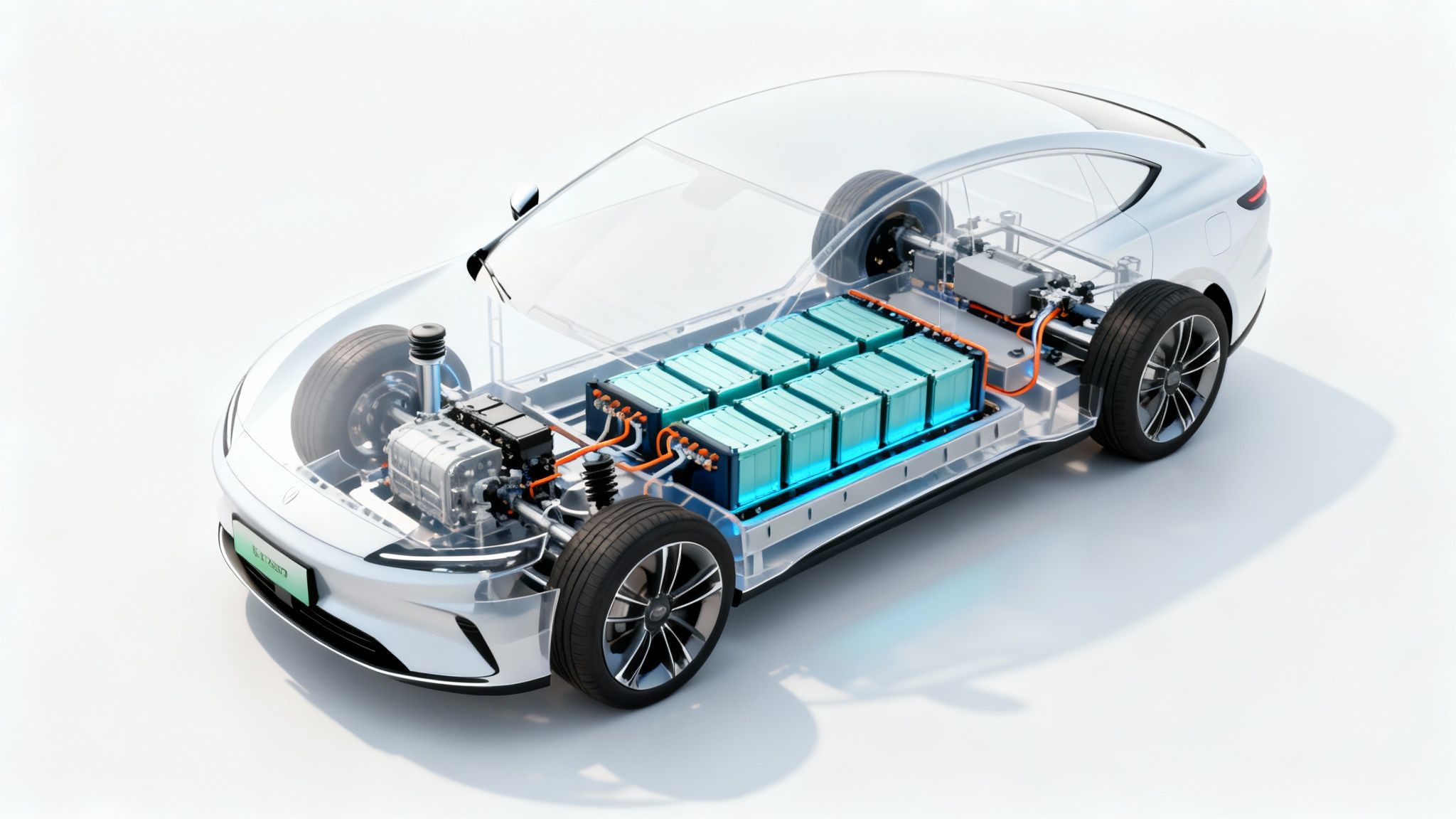
Air-cooled battery packs are largely a thing of the past. Modern electric vehicles surround their battery modules with complex networks of aluminum cooling plates filled with liquid glycol coolant. When sensors detect thermal spikes during aggressive highway driving or high-speed DC fast charging, high-efficiency heat pumps circulate cold fluid directly through the pack, maintaining internal cell temperatures within an optimal window of 20°C to 30°C (68°F to 86°F).
Next-Generation Cell Chemistries
The commercial expansion of Lithium Iron Phosphate (LFP) cells represents a major leap forward in battery durability. Unlike traditional Nickel Manganese Cobalt (NMC) chemistries, LFP cells exhibit remarkable structural stability. They can handle thousands of full charge-discharge cycles with minimal degradation and are far less vulnerable to thermal degradation.
Structural Cell-to-Pack (CTP) Architectures
By eliminating intermediate module housings, Cell-to-Pack designs integrate cells directly into the main chassis enclosure. This reduced complexity allows engineers to fit larger cooling surfaces, distribute weight evenly, and reduce internal heat concentrations across the entire assembly.
5. Software, AI, and Smart Battery Management
Hardware alone cannot prevent degradation; intelligent software plays an equally critical role. The Battery Management System (BMS) serves as the central brain of an EV power pack, executing millions of calculations per second to protect chemical integrity.
A. Active Cell Balancing: No two battery cells are 100% identical. The BMS continuously transfers energy from higher-voltage cells to lower-voltage cells, ensuring that individual cells are never overstressed or overcharged during operation.
B. Dynamic Buffer Allocation: To prevent users from accidentally damaging cells, car manufacturers implement hidden software “buffers.” When your dashboard reads 100%, the physical cells might actually be capped at 95% total capacity. When it reads 0%, a safety margin remains to prevent total voltage collapse.
C. AI-Driven Cloud Diagnostics: Third-generation EVs utilize continuous telemetry streaming to cloud servers. Predictive machine learning algorithms analyze real-time charging curves, temperature spikes, and internal resistance trends to identify degrading cells months before a failure occurs, automatically adjusting charging protocols to preserve health.
D. Automatic Thermal Preconditioning: When an driver inputs a DC fast charger into their onboard navigation system, the vehicle automatically pre-heats or pre-cools the battery pack while en route. This ensures the chemistry reaches the perfect thermal state before accepting high-wattage current, dramatically reducing electrical stress.
6. LFP vs. NMC: Understanding Chemistry Differences
Not all EV batteries behave the same way. Choosing the right care strategy depends heavily on the underlying cell chemistry powering the vehicle.
| Feature / Metric | Lithium Iron Phosphate (LFP) | Nickel Manganese Cobalt (NMC) |
| Energy Density | Moderate (~160–200 Wh/kg) | High (~250–300 Wh/kg) |
| Cycle Lifespan | Exceptional (3,000 to 6,000 cycles) | Good (1,000 to 2,000 cycles) |
| Thermal Stability | Extremely High | Moderate (Requires Active Cooling) |
| 100% Charge Resistance | High (Tolerates daily 100% charge) | Low (Prefers 80% daily limit) |
| Raw Material Safety | Cobalt/Nickel Free | Dependent on Cobalt & Nickel |
| Primary Use Case | Standard Range, Fleet Vehicles | Long Range, Performance Vehicles |
7. The Owner’s Playbook: How to Prevent Battery Loss
While modern engineering handles most protective measures automatically, daily driving and charging habits directly influence how quickly a battery ages over a ten-year span.
+-------------------------------------------------------------------+
|                THE 20-80% GOLDEN CHARGING RULE                    |
+-------------------------------------------------------------------+
|  0% ------------ [ 20% =========== 80% ] ------------ 100%        |
|  CRITICAL          OPTIMAL DAILY ZONE          HIGH STRESS        |
|  (Voltage Strain)   (Minimal Wear)            (Chemical Aging)    |
+-------------------------------------------------------------------+
Follow these actionable, evidence-based practices to ensure maximum battery longevity:
A. Adopt the 20-80% Charge Habit: For daily commuting in NMC-equipped vehicles, keep your charge limit set between 20% and 80% via the in-car settings menu. Only charge to 100% right before embarking on long road trips.
B. Prioritize Level 2 AC Home Charging: Level 2 home and workplace chargers (240V AC) deliver steady, gentle power with negligible heat generation. Reserve high-power Level 3 DC Fast Chargers (>100 kW) for highway trips.
C. Minimize Prolonged High-SoC Parking: Avoid letting an EV sit parked at 100% charge for weeks at a time, especially during hot summer months. If going on vacation, leave the vehicle parked at roughly 50% charge plugged into a wall outlet so the BMS can run its active thermal routines.
D. Precondition Before Fast Charging: Always use your vehicle’s native navigation system when traveling to a fast-charging station. This triggers automatic thermal preconditioning, lowering internal resistance before you plug in.
E. Drive Smoothly and Leverage Regenerative Braking: Aggressive, repeated full-throttle accelerations place massive current discharge demands on the battery, generating spike heat loads. Smooth driving paired with moderate regenerative braking keeps pack temperatures low and consistent.
8. Second-Life Applications and Sustainable Recycling
Even when an EV battery eventually degrades past its automotive usefulness (typically around 70% to 75% SOH), its lifecycle is far from over.
+-------------------------------------------------------------------+
|                    CIRCULAR BATTERY LIFECYCLE                     |
+-------------------------------------------------------------------+
|   [ 1. Automotive Use ]                                           |
|          |  (Degrades to ~75% SOH after 15-20 years)              |
|          v                                                        |
|   [ 2. Second-Life Energy Storage Systems (ESS) ]                 |
|          |  (Stores Solar/Wind power for grid support: +10 years) |
|          v                                                        |
|   [ 3. Closed-Loop Closed Hydro-Recycling ]                        |
|          |  (Extracts 95%+ of Nickel, Cobalt, Lithium, Copper)    |
|          +---> Re-enters manufacturing supply chain --------------+
+-------------------------------------------------------------------+
A robust second-life battery economy transforms degraded vehicle packs into massive stationary energy storage systems (ESS) for power grids. These repurposed packs store excess solar and wind energy, feeding power back into local electricity networks during peak demand periods.
Once a cell finally reaches the end of its functional life, closed-loop hydrometallurgical recycling operations extract up to 95% of critical raw materials—including lithium, nickel, cobalt, and copper—allowing them to be remanufactured directly into brand-new, high-performance battery cells.
9. Future Trends in Battery Protection (2026–2030)
Looking ahead, automotive research and commercial development continue to roll out breakthrough innovations to defeat chemical degradation entirely:
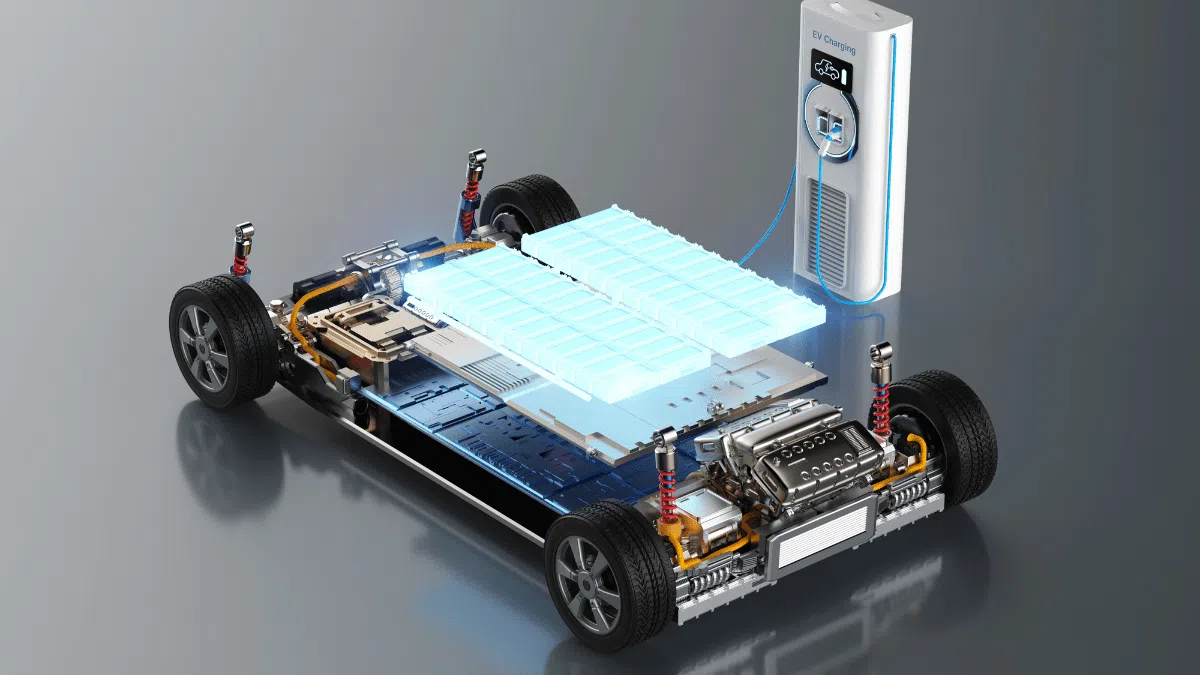
A. Solid-State Battery Systems: By replacing flammable liquid electrolytes with solid ceramics or polymers, solid-state batteries eliminate lithium plating, withstand higher operational heat, and promise cycle lifespans exceeding 500,000 miles.
B. Silicon-Graphene Anode Formulations: Blending advanced silicon materials into traditional graphite anodes increases energy storage capacity while reducing physical cracking during deep charge cycles.
C. AI-Enabled Dynamic Internal Heating: Next-generation packs feature micro-heating elements woven directly into individual cell structures, warming cold cells uniformly in seconds rather than minutes to eliminate winter fast-charging stress.
10. Summary Checklist for EV Longevity
To summarize best practices for maximizing battery health across any brand or model, reference this quick operational checklist:
-
Set your daily charge limit to 80% for NMC batteries.
-
Charge LFP batteries to 100% at least once a week to maintain calibration.
-
Use Level 1 or Level 2 AC chargers for everyday needs whenever possible.
-
Avoid letting the battery drop below 10% to 20% on a routine basis.
-
Park in shaded spots or covered garages during extreme heat waves.
-
Use onboard navigation to route to fast chargers so the battery preconditions automatically.
-
Store the vehicle at 50% state of charge if leaving it unused for extended periods.
Electric vehicle battery degradation is no longer the mysterious, unpredictable flaw it was during the dawn of modern electric motoring. With modern engineering safeguards, smart software management, and a basic understanding of optimal charging habits, today’s electric vehicle batteries are fully capable of delivering high performance over hundreds of thousands of reliable miles.