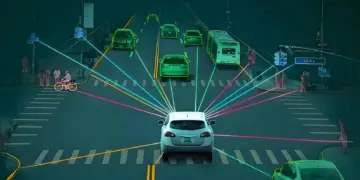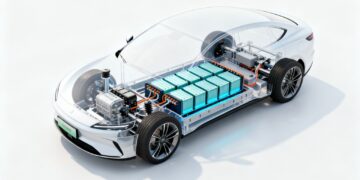
The modern automotive industry is currently experiencing a monumental paradigm shift. For decades, vehicle maintenance relied primarily on mechanical intuition, manual measurements, and reactive troubleshooting. Drivers waited for a warning light to illuminate on their dashboard or listened for an unusual rattling under the hood before seeking professional help. Technicians spent hours isolating faults by manually disassembling components and running process-of-elimination tests. Today, artificial intelligence (AI) has completely rewritten this operational narrative. By integrating sophisticated machine learning algorithms, deep predictive modeling, and internet-connected sensor arrays into automotive architecture, engine repair has evolved from a reactive chore into a proactive, ultra-precise science.
Understanding how artificial intelligence solves complex engine repairs requires examining the intersection of modern hardware, advanced software engineering, and large-scale data analytics. Today’s vehicles are essentially mobile supercomputers generating gigabytes of telemetry data every hour. When processed through advanced machine learning pipelines, this continuous stream of operational telemetry converts raw physical metrics into immediate actionable maintenance guidance. The result is a drastic reduction in diagnostic downtime, greater accuracy in pinpointing obscure mechanical issues, optimized repair costs, and significantly enhanced vehicle longevity.
1. The Core Infrastructure: How AI Detects Engine Anomalies
To appreciate how artificial intelligence streamlines mechanical repairs, one must examine the baseline data acquisition layer embedded within modern vehicles. Engine units no longer function as isolated mechanical assemblies; they operate as interconnected networks monitored by dozens of digital sensors continuously streaming data.
A. Comprehensive Sensor Telematics Data Capture
Modern combustion, hybrid, and electric engines incorporate dense networks of high-frequency sensors. These components measure thermal profiles, fluid dynamics, pressure shifts, and electrical signals across every core system:
-
A. Thermal sensors monitoring coolant, exhaust gas, and cylinder head temperatures.
-
B. Mass air flow (MAF) and manifold absolute pressure (MAP) sensors checking intake air densities.
-
C. Knock sensors detecting high-frequency mechanical vibration from irregular combustion.
-
D. Oxygen and fuel pressure sensors measuring stoichiometric combustion efficiency.
-
E. Crankshaft and camshaft position sensors mapping rotational timing down to fractions of a degree.
B. Machine Learning Pattern Recognition Pipelines
When an engine operates normally, its sensors produce predictable baseline data curves. Machine learning models specifically autoencoders and anomaly detection networks—are trained on billions of miles of healthy telemetry data. When a component begins to degrade, its sensory footprint subtle shifts long before a physical failure occurs. The AI evaluates these micro-deviations in real time, separating harmless statistical noise from early-stage mechanical wear.
C. Onboard Diagnostics (OBD) Evolution to Smart OBD-III
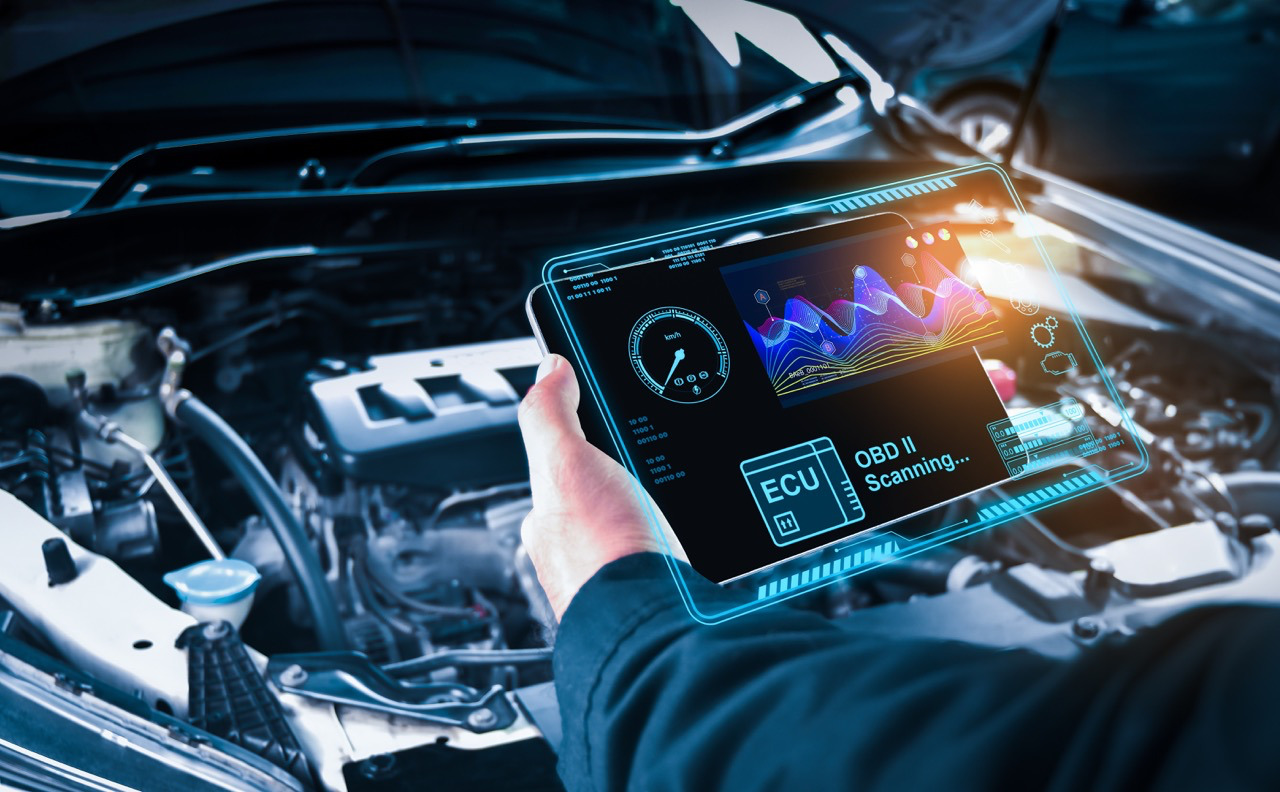
Standard OBD-II systems only store static diagnostic trouble codes (DTCs) when a preset threshold is breached. AI-powered diagnostics elevate this framework by continuously feeding live OBD data through edge computing processors located inside the vehicle or uploaded via cloud telematics. Rather than providing a vague fault code like “P0300 (Random Misfire),” an AI model analyzes the exact timing, load, and thermal conditions surrounding the misfire to report precise root causes such as a clogged fuel injector on cylinder three or a failing ignition coil driver.
2. Acoustic Analytics and Vibration Analysis in Engine Diagnostics
One of the most remarkable breakthroughs in AI engine diagnostics involves auditory and vibrational pattern recognition. Skilled mechanics have long used their ears to identify engine rod knock, squealing belts, or failing water pump bearings. AI codifies and vastly surpasses this human capability through acoustic intelligence.
A. High-Frequency Acoustic Monitoring
AI acoustic tools utilize ultra-sensitive microphone arrays placed near the engine bay or integrated into handheld diagnostic tools. These devices record high-definition sound waves emitted during engine operation. Because every mechanical component valves, pistons, turbos, and timing chains produces a unique sonic frequency during movement, AI can isolate individual sound signatures from a noisy engine bay.
B. Fast Fourier Transform (FFT) and Spectrogram Processing
Once audio signals are captured, the AI applies Fast Fourier Transform algorithms to convert temporal sound into spectral frequencies:
-
A. Conversion of raw acoustic audio into visual spectrograms detailing frequency amplitude over time.
-
B. Isolate specific harmonic bands associated with rotating or reciprocating engine components.
-
C. Map audio peaks against crankshaft rotation speed to pinpoint exact mechanical failure locations.
-
D. Filter background road, exhaust, and environmental noise to focus exclusively on internal engine dynamics.
C. Neural Network Audio Classification
Convolutional Neural Networks (CNNs) the same AI architectures used in computer vision analyze these spectrogram images to categorize mechanical sounds. By matching real-time spectrograms against vast libraries of recorded engine faults, the network identifies early bearing wear, loose timing chains, sticky lifters, or turbocharger compressor surge with over 98% accuracy within seconds.
3. Predictive Maintenance vs. Reactive Engine Repair
The primary economic value of AI in engine management lies in shifting the paradigm from reactive repair to predictive maintenance. Reactive repairs often result in catastrophic cascade failures, where a minor initial defect destroys adjacent expensive components.
                    [ TRADITIONAL REACTIVE CYCLE ]
Component Wear  ──>  Complete Failure  ──>  Cascade Damage  ──>  High Cost / Downtime

                    [ AI-POWERED PREDICTIVE CYCLE ]
Telemetry Shift  ──>  Early AI Flag  ──>  Scheduled Replacement  ──>  Low Cost / Zero Downtime
A. Algorithmic Remaining Useful Life (RUL) Estimation
AI models utilize survival analysis and recurrent neural networks (RNNs) to estimate the Remaining Useful Life (RUL) of critical engine parts. By analyzing driving habits, climate conditions, fuel quality metrics, and oil breakdown rates, the algorithm projects precisely when a part will fail.
-
A. Predictive monitoring of timing belt stress based on torque load histories.
-
B. Dynamic oil degradation modeling derived from actual thermal cycles rather than mileage intervals.
-
C. Turbocharger shaft play tracking through boost pressure latency curves.
-
D. Battery and starter motor decay forecasting using voltage drop profiles during cold cranks.
B. Prevention of Cascade Component Failures
When an engine component operates sub-optimally, it places increased physical stress on surrounding hardware. For instance, a sticky exhaust valve causes unburnt fuel to enter the catalytic converter, causing overheating and melting the expensive catalyst substrate. AI diagnostic tools detect valve timing lag instantly, prompting an inexpensive valve service before a multi-thousand-dollar catalytic converter replacement becomes necessary.
C. Fleet Management Optimization Strategies
For commercial transport and logistics fleets, unexpected engine breakdowns cause massive operational losses. AI fleet management platforms continuously pool telematics from thousands of trucks into a central cloud dashboard. Fleet managers receive automated alerts scheduling preventative service long before a vehicle breaks down on a highway, reducing operational downtime and logistics delays by up to 40%.
4. How AI Assists Technicians in the Repair Shop
Artificial intelligence does not replace human mechanics; rather, it supercharges their expertise, transforming workshops into high-tech precision environments.
A. AI-Guided Step-by-Step Diagnostic Workflows
When a vehicle enters an AI-enabled workshop, the diagnostic tablet automatically scans the car’s history, current error logs, and real-time sensor metrics. The AI platform generates an optimized troubleshooting flowchart for the technician, ranking probable causes by probability and eliminating hours of unnecessary manual testing.
B. Augmented Reality (AR) Repair Interfaces
Modern technicians wear AR headsets or use tablets running spatial AI software that overlays digital repair instructions directly onto the physical engine block:
-
A. Highlighting the exact bolts that must be removed in sequence to access a faulty sensor.
-
B. Displaying dynamic torque specifications over individual fasteners in real-time.
-
C. Superimposing internal fluid flow diagrams over mechanical housings to trace coolant leaks.
-
D. Visualizing hidden electrical wiring harnesses inside dense engine compartments.
C. Automated Repair Procedure Verification
After a technician completes a repair, the AI performs a post-service audit. By running automated engine test cycles and comparing the new operational telemetry against optimal factory baselines, the system confirms that the fix successfully resolved the underlying issue and that no secondary fault codes were introduced during reassembly.
5. Overcoming Complex Diagnostic Challenges with Big Data
Engines are dynamic systems subject to countless environmental variables. Intermittent faults—issues that appear sporadically and vanish when the car reaches a repair shop—have historically been the bane of automotive repair. AI solves this challenge through big data aggregation.
| Diagnostic Method | Traditional Manual Inspection | Standard Diagnostic Tools | AI-Powered Predictive Analysis |
| Fault Identification Speed | Hours to days of physical teardown | Minutes to read basic DTCs | Real-time / Instantaneous |
| Intermittent Problem Accuracy | Very low (requires reproducing fault) | Low (only catches active faults) | Extremely High (analyzes historical logs) |
| Maintenance Paradigm | Reactive (Fix after breakdown) | Preventative (Fix on set schedules) | Predictive (Fix based on condition) |
| Human Error Risk | Moderate to High | Moderate | Low |
| Cost Efficiency | Unpredictable / High labor costs | Standard shop flat-rates | Highly optimized / Minimal downtime |
A. Resolving Intermittent Electrical and Mechanical Faults
Intermittent issues often occur under extremely specific conditions such as a particular combination of ambient temperature, engine load, steering angle, and humidity. Human technicians rarely reproduce these exact parameters during a quick test drive. Cloud-based AI systems record continuous background data logs while the owner drives normally. When the anomaly occurs, the AI snapshots the preceding 30 seconds of high-speed telematics, allowing mechanics to isolate the exact electrical short or thermal expansion issue without guesswork.
B. Global Fleet Telemetry and Knowledge Sharing
AI diagnostic software benefits from network effects. When an AI system encounters a novel, rare engine failure in one part of the world, its root cause analysis and resolution path are instantly uploaded to the global cloud database. The next time a technician anywhere else in the world encounters identical telemetry patterns, the AI instantly recommends the verified solution based on global collective machine learning experience.
6. The Step-by-Step AI Engine Repair Lifecycle
To see how all these technologies harmonize, let us examine the complete lifecycle of a modern AI-assisted engine repair from start to finish.
7. The Role of Generative AI and Natural Language Manuals
Generative AI and Large Language Models (LLMs) trained on technical automotive data are changing how technicians interact with complex service documentation.
Key Industry Insight: Technical automotive service manuals for modern vehicles often exceed 5,000 pages of dense schematics and technical instructions. Generative AI translates these massive document repositories into instant, conversational technical support for mechanics.
A. Instant Technical Knowledge Retrieval
Rather than searching manually through thousands of pages of PDF wiring diagrams and repair bulletins, a technician can ask an AI assistant: “What is the step-by-step procedure and bolt torque sequence for replacing the timing chain on a 2024 twin-turbo V6?” The AI instantly retrieves the precise technical steps, high-resolution schematics, and relevant Technical Service Bulletins (TSBs) issued by the manufacturer.
B. Automated Customer Communication and Transparency
Vehicle maintenance often creates tension between customers and repair shops due to opaque pricing and complex terminology. Generative AI translates complex technical diagnostic outputs into plain, customer-friendly language. The system automatically creates visual inspection reports for car owners, detailing what failed, why it needs replacement, and how fixing it now prevents costlier future repairs.
8. Financial and Environmental Benefits of AI Engine Maintenance
The implementation of artificial intelligence in automotive servicing yields substantial economic and environmental advantages for car owners, fleet operators, and global sustainability efforts.
A. Direct Economic Savings for Owners
-
A. Reduced labor hours spent on diagnostic troubleshooting in workshops.
-
B. Minimization of unnecessary “part swapping” based on unverified mechanic guesses.
-
C. Prevention of catastrophic engine failures requiring full engine overhauls or replacements.
-
D. Better resale value retention through verified, cloud-backed AI service records.
B. Environmental Sustainability and Fuel Efficiency
Engines operating with slight misfires, dirty sensors, or suboptimal air-fuel ratios burn excess fuel and emit higher levels of harmful emissions, including carbon monoxide (CO) and unburnt hydrocarbons (HC). By keeping engine combustion parameters tuned to near-perfect factory tolerances through continuous monitoring, AI diagnostics directly lower global carbon footprints and optimize fuel economy across millions of vehicles worldwide.
9. Future Trends: What Lies Ahead for AI Automotive Repair?
As automotive technology rapidly advances toward full autonomous driving and complex electrification, the role of AI in mechanical troubleshooting will become even more indispensable.
+-----------------------------------------------------------------------+
|                      FUTURE AI AUTOMOTIVE TRENDS                      |
+-----------------------------------------------------------------------+
|  [Self-Healing Systems]  ──> Digital software & thermal rerouting     |
|  [Digital Twin Mapping]  ──> Real-time virtual engine replication     |
|  [Autonomous Repair]    ──> Robotic bays with zero human intervention |
+-----------------------------------------------------------------------+
A. Autonomous Vehicle Self-Diagnosis and Service Scheduling
Fully autonomous vehicle fleets will require self-contained diagnostic and repair loops. Future robo-taxis will monitor their own mechanical health using embedded AI, drive themselves to specialized automated service hubs during off-peak hours, and communicate directly with robotic repair units for maintenance all without human intervention.
B. Digital Twin Engine Simulations
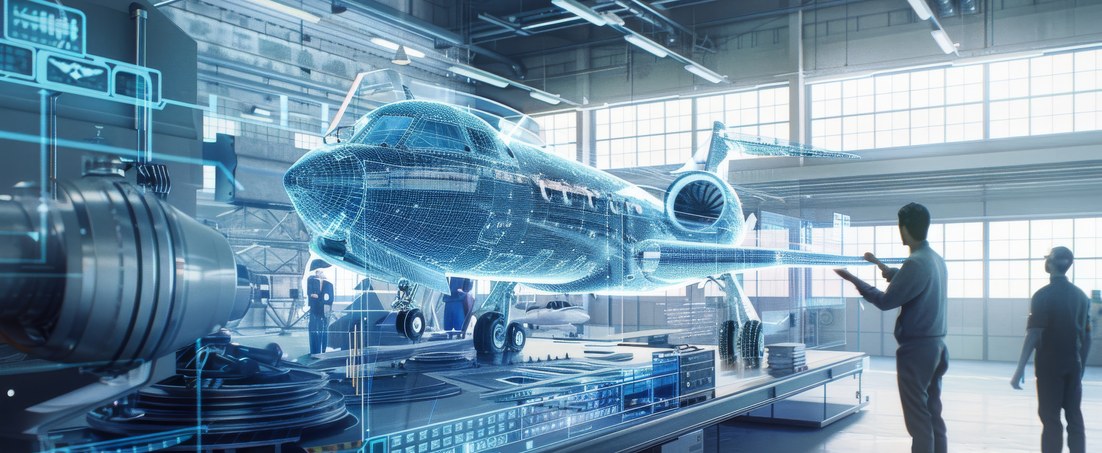
Engine manufacturers are building “Digital Twins” exact digital software replicas of every individual physical engine produced. Powered by physics-based AI models, the cloud digital twin mirrors every vibration, thermal cycle, and mile driven by the physical engine on the road. This allows engineers to predict failures in virtual space days or weeks before they manifest in the physical world.
Conclusion: Embracing the AI Automotive Revolution
Artificial intelligence is fundamentally redefining how engine repairs are diagnosed, managed, and executed. By replacing guesswork with precise sensory analytics, predictive machine learning models, acoustic monitoring, and automated diagnostic workflows, AI ensures that modern vehicles remain safer, more reliable, and far more economical to maintain. For vehicle owners, fleet operators, and automotive technicians alike, embracing AI-powered engine diagnostics is no longer a futuristic novelty it is the modern standard powering the future of transportation.