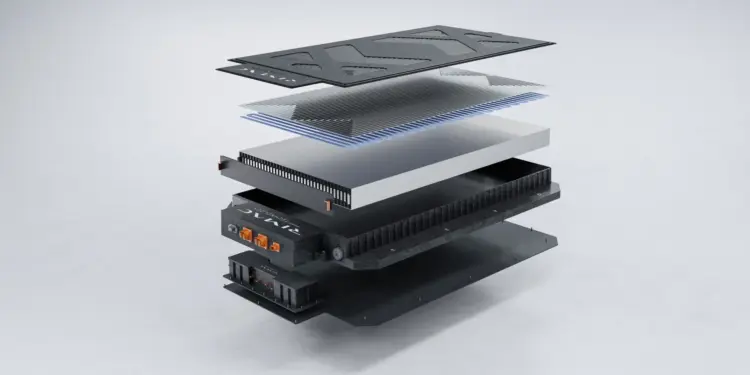
For decades, consumer perception maintained a rigid boundary between computing hardware and software. Hardware represented the tangible, physical component—the silicon dies, copper traces, transistors, and capacitors fixed inside a device during assembly. Software, conversely, was viewed as malleable instructions executed by those physical circuits. Under this traditional paradigm, if a physical component suffered from a physical flaw, the solution required physical intervention: a product recall, a component replacement, or a trip to a certified repair technician.
However, modern system engineering has rendered this strict division obsolete. As microprocessors, system-on-chips (SoCs), graphics processors (GPUs), and embedded microcontrollers have grown exponentially more complex, physical hardware has become increasingly reliant on software-driven control layers. Today, tech conglomerates and chip designers routinely deploy software patches, firmware overhauls, and microcode updates to resolve, bypass, or mitigate physical hardware flaws.
This article explores how software updates rectify hardware defects, examining the technical mechanisms, real-world case studies, economic implications, and performance trade-offs associated with patching physical silicon using digital code.
Understanding the Layers Between Hardware and High-Level Code
To understand how software alters hardware behavior, one must inspect the execution hierarchy of contemporary computing architectures. Software is not merely a single monolith running on top of bare metal; rather, it consists of multiple specialized layers.
+-------------------------------------------------------+
|              High-Level Applications                 |
+-------------------------------------------------------+
|                  Operating System                     |
+-------------------------------------------------------+
|               Device Drivers & API                    |
+-------------------------------------------------------+
|               Firmware / System BIOS                  |
+-------------------------------------------------------+
|                 CPU Microcode                         |
+-------------------------------------------------------+
|            Physical Hardware (Silicon/Gates)          |
+-------------------------------------------------------+
Key Functional Layers
A. Microcode Layer: Microcode serves as an intermediate translation layer inside complex instruction set computer (CISC) processors, such as modern x86 Architecture chips. It translates high-level assembly instructions into sequences of primitive hardware circuit operations called micro-operations (micro-ops). Because microcode resides in rewritable static RAM (SRAM) or flash memory within or near the processor, chipmakers can rewrite the execution pathways of the CPU without altering the physical silicon substrate.
B. Firmware and UEFI/BIOS: Operating below the operating system, firmware provides low-level control instructions for specific device hardware. Motherboard BIOS/UEFI, drive controllers, power management ICs, and GPU VBIOS are classic examples. Firmware controls clock speeds, voltage tables, fan profiles, and hardware initialization sequences.
C. Device Drivers: Operating system-level drivers dictate how higher-level software commands translate into hardware registers. Drivers enforce operational boundaries, dynamic clock adjustments, memory mapping, and safety protocols for attached hardware peripherals.
Core Techniques: How Software Resolves Physical Hardware Bugs
Software fixes physical hardware defects not by altering physical atoms, but by altering operational behavior, logic routing, and operating parameters. The principal methods utilized by hardware engineers include:
1. Functional Microcode Patching and Instruction Rerouting
When a physical logic gate arrangement inside a processor yields incorrect calculation results or vulnerability pathways under specific conditions, a microcode update alters how the CPU processes those commands.
A. Instruction Substitution: The updated microcode instructs the execution engine to avoid utilizing faulty hardware logic blocks, replacing a single problematic instruction with an equivalent, safe sequence of micro-operations.
B. Execution Gating: The CPU can disable specific speculative execution pathways or branch prediction mechanisms when processing sensitive tasks.
2. Operational Parameter Adjustments
Hardware components operate within specific physical parameters, including voltage, clock frequency, thermal thresholds, and duty cycles. Physical defects often manifest when hardware operates near structural tolerances.
A. Undervolting and Underclocking: If silicon degradation causes instability at high clock rates or voltages, software updates can dynamically lower peak frequencies or cap power draws to maintain systemic stability.
B. Thermal Profile recalibration: Adjusting cooling fan curves, temperature cut-off limits, and thermal throttling thresholds prevents hardware components from reaching destructive thermal states.
3. Workaround Wrappers and Driver-Level Emulation
When a fixed-function hardware block (such as a hardware video decoder, network controller, or memory channel controller) contains a structural defect, software drivers can isolate the faulty unit entirely.
A. Software Fallback Execution: The operating system redirects processing requests from defective hardware processing blocks to general-purpose CPU or GPU compute cores.
B. Memory Remapping and Retirement: Software memory controllers can identify damaged or volatile physical RAM cells or Flash blocks, marking them as unusable and remapping system addresses to healthy memory blocks.

Notable Real-World Case Studies
The history of consumer technology and enterprise computing contains numerous instances where software interventions rescued hardware from catastrophic failure.
Real-World Examples of Software Hardware Fixes
A. Intel Spectre and Meltdown Vulnerabilities (2018):
Spectre and Meltdown exposed structural security flaws in modern processor architectures using speculative execution and branch prediction. Rather than replacing billions of CPUs worldwide, chip manufacturers issued microcode patches alongside operating system kernel updates (such as KPTI – Kernel Page-Table Isolation). These updates altered how CPU micro-architectures handled speculative data caching and memory barriers, neutralizing security vulnerabilities in hardware logic.
B. Tesla Over-the-Air (OTA) Braking and Suspension Adjustments:
In 2018, Consumer Reports highlighted inconsistent stopping distances in the Tesla Model 3 during emergency braking tests. Tesla deployed an over-the-air software update within days that recalibrated the anti-lock braking system (ABS) algorithm, altering pump modulation frequency and energy recovery profiles. This digital adjustment reduced stopping distance by nearly 20 feet without physically altering brake pads, rotors, or calipers.
C. Samsung Smartphone Battery Thermal Management:
Following thermal incidents in lithium-ion smartphone batteries, manufacturers deployed mandatory OTA software updates. These updates introduced aggressive battery management algorithms that capped maximum charge states (e.g., stopping charging at 60% or 80%), reduced peak fast-charging current profiles, and monitored internal impedance variations to prevent thermal runaway conditions in degraded cell chemistry.
D. Graphics Card (GPU) Power Subsystem Recalibration:
When modern graphics cards experienced unexpected blackouts and system crashes due to high operational power spikes (transient voltage spikes triggering power supply protection circuits), GPU manufacturers issued updated VBIOS files. These updates adjusted dynamic voltage-frequency curves (VF curves) and smoothed out transient power delivery states, balancing board power consumption without requiring physical component replacements on the graphics card PCB.
Comparison: Physical Hardware Replacement vs. Software Patching
While software patching offers significant operational efficiency, it introduces distinct tradeoffs compared to physical component replacement.
| Feature / Metric | Physical Hardware Replacement | Software / Microcode Mitigation |
| Deployment Speed | Months to years (Logistics, manufacturing, shipping) | Minutes to days (OTA distribution network) |
| Direct Financial Cost | High (Parts, labor, return shipping, recycling) | Minimal (Bandwidth, engineering overhead) |
| Performance Impact | Restores or retains 100% nominal hardware output | May incur 1% to 30% performance penalty |
| Consumer Convenience | Low (Device downtime, physical drop-off/mailing) | High (Automated background download) |
| Completeness of Fix | Eliminates underlying physical flaw completely | Circumvents flaw through logical constraint |
Strategic Advantages of Fixing Hardware via Software
From an economic, environmental, and technological perspective, resolving physical hardware defects through digital code provides substantial benefits to manufacturers, enterprise data centers, and end-users.
Key Benefits
A. Elimination of Catastrophic Recall Logistics: Physical product recalls incur massive logistical challenges, requiring manufacturers to manufacture millions of replacement units, manage reverse logistics networks, and recycle defective hardware. Software mitigations resolve global issues instantaneously through content delivery networks (CDNs).
B. Extended Hardware Lifespan: Devices deployed in harsh environments—such as remote industrial sensors, automotive platforms, orbital satellites, and underwater telecom cables—cannot be easily serviced physically. Firmware patches enable remote maintenance, preserving operational viability over extended life cycles.
C. Data Center Business Continuity: Enterprise server infrastructure relies on unbroken uptime. Disassembling server racks to replace microprocessors or memory modules incurs severe downtime costs. Microcode updates applied at hypervisor or OS boot levels allow enterprise operators to maintain system security and stability without physical hardware teardowns.
D. Reduction in E-Waste: Resolving operational flaws digitally prevents functional consumer electronics, laptops, and automotive components from prematurely entering global electronic waste streams.
The Hidden Costs: Trade-offs and Limitations
Despite its advantages, software-based hardware mitigation is not a complete panacea. The dynamic of using code to constrain defective silicon introduces technical and operational compromises.
Crucial Engineering Reality: Software patches cannot magically fix broken atomic structures or physically burnt traces; they function by restricting operational parameters, disabling features, or routing execution through alternate logic paths—often at the cost of computing efficiency.
Major Trade-offs and Challenges
A. Performance Penalties: When microcode patches disable hardware-level execution optimizations (such as speculative execution, hardware acceleration modules, or instruction pipelines), the processor must fall back on less efficient software instructions. In enterprise server environments, mitigations for flaws like Spectre/Meltdown resulted in throughput reductions ranging from 2% to over 20% on specific I/O-intensive workloads.
B. Feature Loss and Functionality Degradation: In severe instances, software fixes resolve hardware vulnerabilities by permanently disabling damaged hardware blocks. Examples include permanently disabling broken hardware AVX-512 instruction units, capping maximum screen refresh rates to prevent display panel flickering, or reducing wireless transceiver output power to comply with unexpected thermal limits.
C. Long-Term Hardware Instability: Relying on software to mask physical degradation (such as electromigration inside silicon traces) may only delay hardware failure rather than eliminate it. As silicon continues to age, original parameter adjustments may prove insufficient, requiring progressively stricter software throttling over time.
D. Complexity and Technical Debt: Layering workarounds within device drivers, operating system kernels, and system microcode creates maintenance overhead. Developers must maintain complex legacy workarounds, increasing the potential for software bugs in future firmware updates.
How Modern Engineers Design Hardware for Software Patchability
Recognizing that modern microprocessors and microcontrollers will inevitably ship with undetected hardware bugs (often referred to as errata), semiconductor designers build patchability directly into physical silicon architecture.
Silicon Design Strategies for Software Patchability
A. Programmable Microcode RAM: Modern CPUs feature embedded, high-speed static RAM dedicated to microcode execution. During system boot, the operating system kernel or UEFI BIOS loads vendor-provided microcode updates into this RAM, overriding default hardwired ROM logic routines.
B. Chicken Switches and Register Overrides: Hardware engineers incorporate configurable bit registers—colloquially known as “chicken switches”—within complex logic pipelines. If a newly designed hardware feature exhibits unexpected defects in production, engineers can flip these internal hardware registers via firmware to disable or bypass the flawed module while preserving general CPU functionality.
C. Field Programmable Gate Arrays (FPGAs) and Soft-Cores: Automotive and industrial systems increasingly employ hybrid SoC architectures containing FPGA fabric alongside traditional processing cores. If a hardware interface or protocol logic block contains an error, the FPGA logic can be reconfigured over-the-air to redefine hardware connections at a gate level.
D. Telemetry and Remote Diagnostics: Contemporary devices continually stream operational telemetry—such as internal voltage variance, error-correcting code (ECC) memory rates, temperature spikes, and clock jitter—back to engineering teams. This data allows developers to proactively identify emerging hardware failure trends across millions of active units and deploy preventative firmware adjustments before widespread physical failures occur.
Step-by-Step Mechanism: How a Microcode Update Fixes a Processor Flaw
To clarify how a digital update modifies physical CPU execution, consider the step-by-step lifecycle of a microcode patch deployment:
Deployment Workflow
A. Erratum Identification: Engineers discover a physical hardware bug (e.g., an incorrect mathematical output produced during a rare combination of floating-point operations and memory access commands).
B. Patch Development: Chip designers author a revised microcode routine that intercepts the specific problematic instruction sequence and reroutes execution through alternative, bug-free micro-operation paths within the execution units.
C. Cryptographic Signing: The chip manufacturer signs the binary microcode update file using an encrypted private master key. The CPU’s on-chip hardware security module validates this cryptographic signature to prevent unauthorized system modifications.
D. Distribution and BIOS Integration: The signed patch is delivered to motherboard manufacturers for UEFI BIOS updates or packaged directly into operating system kernel update streams (such as Windows Update or Linux Microcode Packages).
E. Boot-Time Loading: Upon power initialization, the motherboard BIOS or OS kernel loads the microcode binary into the CPU’s volatile microcode control store memory.
F. Runtime Interception: When applications submit instructions to the CPU, the updated microcode routing table redirects execution away from the defective silicon pathway, ensuring accurate and stable output.

Future Outlook: AI-Driven Hardware Repair and Adaptive Silicon
As computing technology transitions toward smaller semiconductor nodes (such as 2nm and sub-2nm processes), manufacturing variations and physical silicon defects will become increasingly common. Future hardware design will rely heavily on adaptive software control layers.
Emerging Trends
A. Autonomous On-Chip Monitoring and Self-Healing: Future processors will embed machine learning accelerators trained to analyze internal sensor telemetry in real time. When the system detects physical silicon degradation, localized electromigration, or memory cell failure, internal software agents will automatically rebalance workload distribution, adjust local voltage domains, and isolate defective silicon regions without requiring human intervention.
B. Software-Defined Hardware Architectures: The industry is moving rapidly toward software-defined silicon models where hardware functionality is licensed, unlocked, and configured via secure software policies. This paradigm allows manufacturers to manufacture standardized hardware dies, activating or disabling specific processing blocks via software based on thermal health, defect density, and customer requirements.
C. Standardized Over-the-Air (OTA) Governance: With connected vehicles, smart cities, and IoT infrastructure expanding globally, international standard bodies are establishing rigorous framework protocols for remote firmware and microcode deployment to ensure hardware fixes are applied securely without risking operational disruption.
Conclusion
The assertion that software updates fix hardware defects represents a fundamental truth of contemporary technology. While digital code cannot physically replace broken solder joints or repair fractured silicon wafers, it possesses the power to modify physical execution paths, recalibrate power and thermal envelopes, isolate defective memory banks, and re-route logic execution through safe alternatives.
The modern paradigm of computing relies on a dynamic balance: physical hardware provides the processing power, while flexible software layers safeguard, optimize, and occasionally rescue that hardware from its own physical flaws. As computing systems become ever more intricate, the boundary between hardware and software will continue to blur, making software updates an essential tool for preserving physical hardware integrity.