The global energy storage landscape is undergoing an unprecedented paradigm shift. For over three decades, conventional lithium-ion batteries have served as the foundation of modern portable electronics, electric vehicles (EVs), and grid-scale storage systems. However, as demand accelerates for longer driving ranges, faster charging cycles, enhanced energy density, and absolute thermal safety, legacy liquid-electrolyte chemistry is rapidly approaching its theoretical physical limitations.
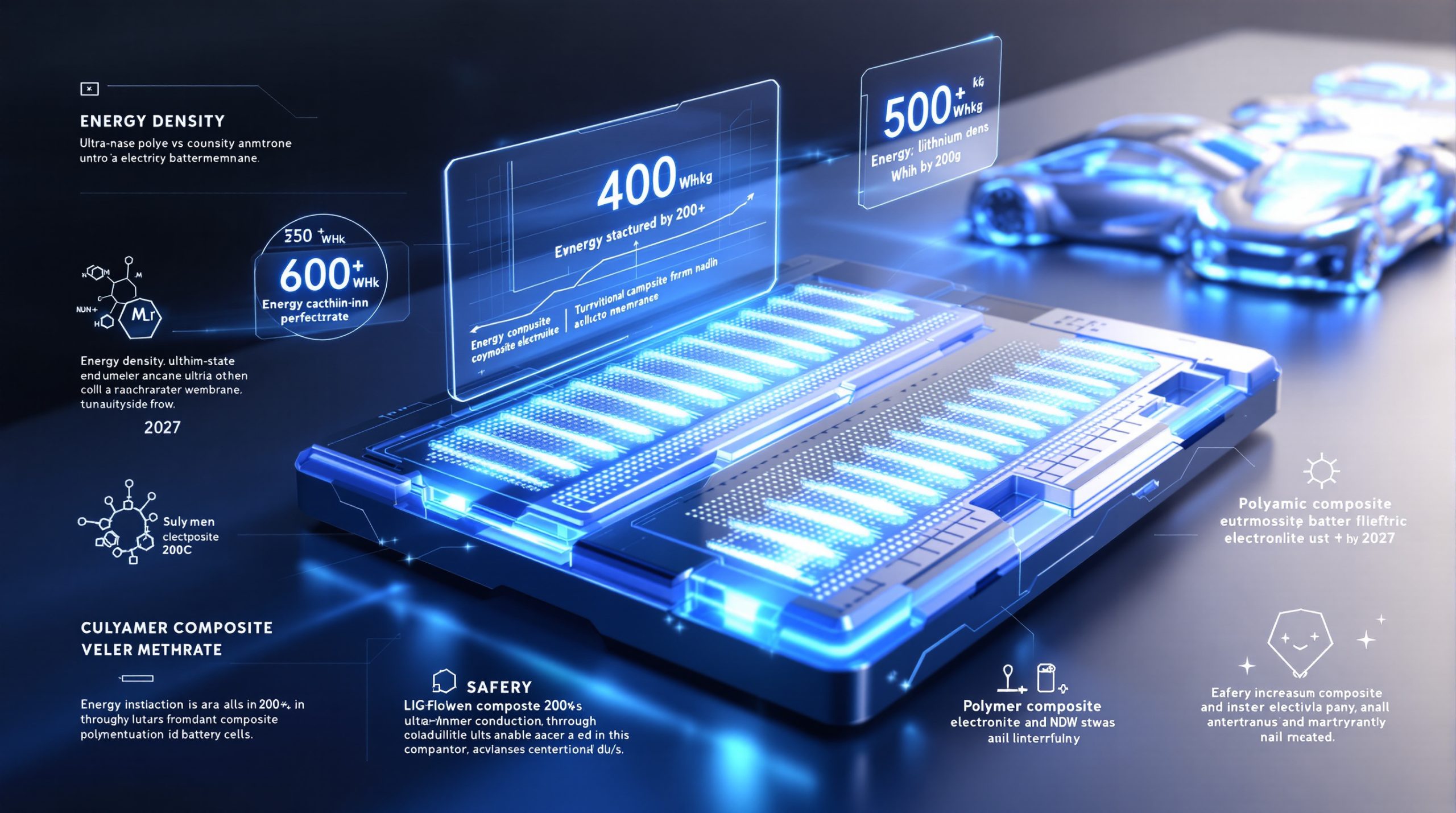
Enter next-generation solid-state battery (SSB) technology. By replacing the liquid organic electrolyte and polymer separator found in standard lithium-ion cells with a solid ionic conductor, SSBs promise to fundamentally revolutionize electrochemical energy storage. This technological leap unlocks gravimetric energy densities reaching 400 to 500+ Wh/kg, ultra-fast charging capabilities under 15 minutes, and superior intrinsic safety by eliminating flammable organic solvents.
This comprehensive guide explores the working mechanics, electrolyte materials, engineering hurdles, key commercial players, and future trajectory of solid-state battery technology.
Fundamental Mechanics: How Solid-State Batteries Function
To understand why solid-state technology represents such a massive evolutionary step, it is essential to first analyze the structural baseline of traditional lithium-ion architecture.
Comparative Chemistry: Liquid vs. Solid Infrastructure
A standard lithium-ion cell consists of four primary components:
A. A liquid organic electrolyte that facilitates lithium-ion transport.
B. A micro-porous polymer separator that physically isolates the anode and cathode to prevent short circuits.
C. A graphite or silicon-composite anode acting as the negative electrode host.
D. A lithium metal oxide cathode acting as the positive electrode host.
During charging, lithium ions travel from the cathode through the liquid electrolyte, passing through the porous separator to intercalate into the graphite anode. During discharge, the reverse process occurs, releasing electrons into the external circuit to perform electrical work.
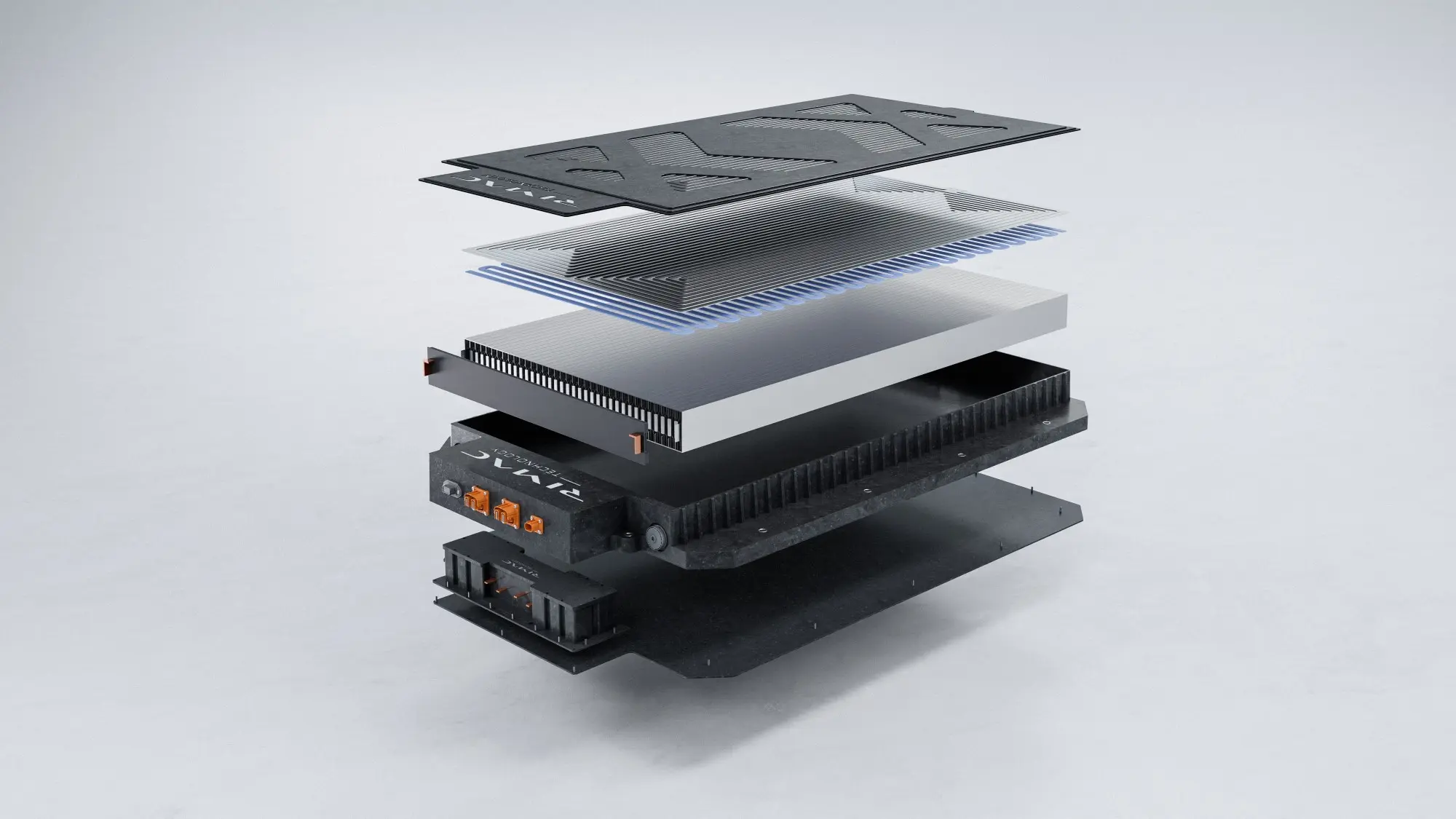
In a next-generation solid-state battery, the liquid electrolyte and polymer separator are replaced entirely by a solid electrolyte separator. This single modification yields extraordinary architectural advantages:
A. Elimination of Flammable Solvents: Traditional liquid electrolytes utilize volatile organic carbonates that can ignite or explode if punctured, overcharged, or exposed to high temperatures (thermal runaway). Solid electrolytes are inherently non-flammable and structurally rigid.
B. Enablement of Pure Lithium Metal Anodes: In liquid systems, using pure lithium metal as an anode causes rapid formation of needle-like structures called dendrites. Solid ceramic or sulfide separators physically block dendrite growth, allowing the utilization of pure lithium metal anodes. Lithium metal boasts a theoretical capacity of 3,860 mAh/g—roughly ten times greater than conventional graphite.
C. Anodeless Architecture Options: Advanced SSB designs utilize an “anodeless” configuration, where the battery is manufactured without an initial anode active material. Lithium plates directly onto the current collector during the first charge, vastly reducing cell volume and manufacturing mass.
Technical Comparison: Solid-State vs. Traditional Lithium-Ion
| Metric / Parameter | Conventional Lithium-Ion (LIB) | Semi-Solid-State Battery | All-Solid-State Battery (ASSB) |
| Electrolyte Phase | Liquid Organic Carbonate | Hybrid Liquid-Gel / Ceramic Matrix | Pure Solid (Sulfide, Oxide, or Polymer) |
| Volumetric Energy Density | 600 – 750 Wh/L | 750 – 900 Wh/L | 900 – 1,200+ Wh/L |
| Gravimetric Energy Density | 200 – 280 Wh/kg | 300 – 380 Wh/kg | 400 – 500+ Wh/kg |
| 80% Fast Charge Time | 30 – 60 Minutes | 20 – 30 Minutes | 10 – 15 Minutes |
| Thermal Safety Profile | High risk of thermal runaway | Moderate thermal stability | Extreme intrinsic thermal stability |
| Operating Temperature Range | -20°C to +50°C | -30°C to +60°C | -40°C to +100°C+ |
| Estimated Cell Lifespan | 800 – 1,500 Cycles | 1,200 – 2,000 Cycles | 2,000 – 5,000+ Cycles |
Major Solid Electrolyte Material Categories
The performance of an all-solid-state cell depends almost entirely on the material composition of its solid electrolyte separator. Today, global research and industrial development center around three main material families, each presenting distinct trade-offs in ionic conductivity, mechanical flexibility, chemical stability, and ease of manufacturing.
A. Sulfide-Based Electrolytes
Sulfide-based materials (such as lithium thiophosphate glasses and argyrodites, e.g., $Li_{10}GeP_2S_{12}$) currently lead the commercial automotive race.
-
Primary Advantages:
A. Exceptionally high room-temperature ionic conductivity ($10^{-3}$ to $10^{-2}$ S/cm), rivaling or exceeding liquid electrolytes.
B. Soft, ductile mechanical property allowing excellent contact at the solid-solid interfaces under moderate pressure.
C. Low processing temperatures compared to oxide ceramics.
-
Primary Drawbacks:
A. Extreme chemical reactivity with ambient moisture, which can release toxic hydrogen sulfide ($H_2S$) gas.
B. Requires stringently controlled dry-room environments or inert atmosphere handling during manufacturing.
C. High cost of raw chemical precursors like lithium sulfide ($Li_2S$).
B. Oxide-Based Electrolytes
Oxide ceramics (such as Garnet-type LLZO—$Li_7La_3Zr_2O_{12}$, NASICON-type, and Perovskite-type LLTO) represent the most chemically stable class of solid electrolytes.
-
Primary Advantages:
A. Unrivaled chemical and electrochemical stability against lithium metal anodes and high-voltage cathodes.
B. Completely immune to atmospheric moisture degradation, removing toxic gas risks.
C. Exceptional mechanical strength, offering high resistance to physical puncture and dendrite penetration.
-
Primary Drawbacks:
A. High interfacial resistance due to rigid, ceramic-on-solid contact boundaries.
B. Brittle nature makes large-area thin-film manufacturing prone to cracking during high-speed roll-to-roll assembly.
C. Requires high-temperature sintering processing (often exceeding 1,000°C), consuming substantial energy during manufacturing.
C. Polymer and Composite Electrolytes
Polymer-based electrolytes feature solid polymer matrices (such as Polyethylene Oxide, or PEO) integrated with conductive lithium salts. Composite variants incorporate inorganic ceramic fillers into the polymer host.
-
Primary Advantages:
A. Excellent flexibility and mechanical compliance, seamlessly integrating into current roll-to-roll battery manufacturing lines.
B. Low production cost and mature scalable processing techniques.
C. Superior interface contact with electrode particles without requiring extreme external stack pressures.
-
Primary Drawbacks:
A. Poor room-temperature ionic conductivity ($10^{-6}$ to $10^{-5}$ S/cm), usually requiring elevated working temperatures (60°C to 80°C) to function efficiently.
B. Lower voltage stability limits the use of ultra-high-voltage cathode chemistries.
C. Lower mechanical strength compared to pure oxides or sulfides, requiring precise engineering to manage dendrite growth.
Primary Benefits Driving Global Industrial Adoption
The global transition toward solid-state energy storage is accelerated by transformational performance benefits that solve the major pain points of modern electric mobility and consumer electronics.
+-----------------------------------------------------------------------+
|                 NEXT-GEN SOLID-STATE ADVANTAGES                       |
+-----------------------------------------------------------------------+
| A. ENERGY DENSITY   | Up to 500+ Wh/kg enables 1,000+ km EV ranges      |
| B. RAPID CHARGING   | 10 to 15 minute charging without thermal stress  |
| C. INTRINSIC SAFETY | Zero volatile liquids removes risk of fires         |
| D. PACK EFFICIENCY  | Eliminates heavy liquid cooling & structural armor|
+-----------------------------------------------------------------------+
A. Radical Energy Density Scaling
By enabling pure lithium-metal anodes and high-voltage nickel-rich or manganese-rich cathodes, solid-state cells achieve unprecedented specific energy (Wh/kg) and volumetric density (Wh/L). For electric vehicles, this translates directly to doubling driving ranges on a single charge—moving standard passenger EV ranges from 400 km to over 1,000 km without increasing overall battery pack weight or physical size.
B. Extreme Fast Charging and Thermal Tolerance
In liquid batteries, rapid charging forces lithium ions through the liquid at high rates, often causing metallic lithium to deposit unevenly on the anode surface (lithium plating), leading to thermal instability and internal short circuits. Solid-state separators overcome this bottleneck, facilitating uniform lithium plating at higher current densities. This allows safe 10-to-80% charge cycles in under 15 minutes.
C. Absolute System-Level Safety
Because solid electrolytes contain no volatile organic solvents, the primary driver of battery fires—thermal runaway caused by mechanical puncture, internal short circuiting, or external over-heating—is virtually eliminated. Cells subjected to severe mechanical damage or nail-penetration tests maintain stability without exploding or producing uncontrolled flames.
D. Simplified Pack Architecture and Weight Reduction
Eliminating flammable liquids allows automotive engineers to redesign the entire battery pack system:
A. Heavy, complex liquid cooling loops, chillers, and protective flame-retardant barriers can be drastically simplified or removed.
B. Modules can be packed much tighter (Cell-to-Pack or Cell-to-Chassis configurations), maximizing usable volumetric efficiency.
C. Total vehicle curb mass is significantly reduced, improving efficiency, acceleration, and tire longevity.
Key Engineering Bottlenecks and Manufacturing Challenges
Despite undeniable theoretical superiority, transitioning solid-state chemistry from controlled laboratory prototypes to mass-scale industrial manufacturing presents complex scientific and engineering hurdles.
+-----------------------------------------------------------------------+
|                    CORE ENGINEERING CHALLENGES                        |
+-----------------------------------------------------------------------+
| A. INTERFACIAL RESISTANCE | Solid-to-solid ion transfer bottleneck     |
| B. LITHIUM DENDRITES     | Micro-cracks allow dendrite penetration    |
| C. VOLUME EXPANSION       | Lithium plating causes intense mechanical  |
|                           | stress during charge/discharge cycles     |
| D. MANUFACTURING COSTS    | Ultra-thin ceramic/sulfide scaling is high |
+-----------------------------------------------------------------------+
A. Solid-Solid Interfacial Resistance
In a conventional battery, liquid electrolyte flows into every microscopic pore of the porous cathode and anode, providing seamless contact surfaces for ion transfer. In a solid-state system, joining two solid materials (solid electrode + solid electrolyte) creates micro-scale gaps and high interfacial impedance. Maintaining uniform physical contact throughout thousands of charge-discharge cycles requires innovative interface coatings or precise external stack pressures.
B. Dendrite Penetration in Solid Media
While solid separators were originally expected to block dendrites entirely, experiments reveal that lithium can still push through grain boundaries or microscopic voids within ceramic or sulfide separators under high fast-charging currents. Resolving this issue demands high-density, defect-free separator films engineered at nanometer tolerances.
C. Volumetric Expansion and Mechanical Stress
During charging, as lithium metal plates onto the anode side, the cell expands; during discharge, as lithium leaves, the cell contracts. This continuous volume fluctuation creates intense internal mechanical stress. Without active external pressure mechanisms or flexible structural cell designs, the internal solid-solid contacts can fracture, leading to rapid capacity loss.
D. High Material and Production Costs
Synthesizing high-purity solid electrolyte powders such as lithium sulfide ($Li_2S$) or germanium-containing oxides remains expensive. Furthermore, converting these materials into sub-20-micron flexible, pinhole-free membranes at high production speeds demands brand-new manufacturing machinery, requiring multibillion-dollar capital investments from gigafactories worldwide.
Global Commercialization Roadmap and Industrial Progress
The commercial deployment of solid-state technology is unfolding in a phased progression, moving from hybrid semi-solid cells to full all-solid-state commercial automotive packs.
                     SOLID-STATE COMMERCIAL TIMELINE

  2024 - 2026                 2027 - 2028                 2029 - 2030+
+-----------------------+   +-----------------------+   +-----------------------+
| SEMI-SOLID DEPLOYMENT |   | PILOT ALL-SOLID UNITS |   | MASS COMMERCIAL SSBS  |
|                       |   |                       |   |                       |
| * Hybrid liquid-gels  |-->| * Small-series EVs    |-->| * Mass market adoption|
| * 300-380 Wh/kg cells |   | * Premium EV models   |   | * 500+ Wh/kg cells    |
| * Early EV platforms  |   | * 400-450 Wh/kg cells |   | * Cost parity with LIB|
+-----------------------+   +-----------------------+   +-----------------------+
Phase A: Semi-Solid Transition Era (2024–2026)
To bypass manufacturing bottlenecks while achieving immediate safety and density upgrades, several battery makers introduced semi-solid (hybrid) designs. These cells utilize ceramic-coated solid matrices infused with small amounts (5–10%) of liquid or gel electrolyte. Vehicles equipped with 150 kWh semi-solid battery packs have demonstrated real-world driving ranges approaching 1,000 km, serving as a commercial bridge toward all-solid architectures.
Phase B: Pilot All-Solid-State Commercialization (2027–2028)
Leading global automotive original equipment manufacturers (OEMs) and tier-one battery developers have established firm target dates for low-volume, high-performance all-solid-state EV releases:
A. Toyota: Holding over 1,000 solid-state patents, Toyota targets pilot launch of all-solid-state EVs by 2027–2028, boasting 1,000+ km ranges and 10-minute fast charging.
B. QuantumScape & Volkswagen Group: Through their pilot manufacturing lines, QuantumScape is validating anodeless solid-state lithium-metal cells (such as the QSE-5 platform) with targeted volumetric densities exceeding 800 Wh/L.
C. Samsung SDI: Operating dedicated pilot production lines (“S-line”), Samsung SDI targets mass production of sulfide-based all-solid-state batteries by 2027, achieving cell densities near 500 Wh/kg.
D. CATL & LG Energy Solution: Expanding investments across sulfide and composite pilot platforms, planning initial commercial deployments between 2027 and 2030.
Phase C: Full Mass Market Adoption (2029–2030 and Beyond)
By 2030, as manufacturing equipment matures and raw material supply chains scale globally, all-solid-state batteries are projected to reach cost parity with high-end conventional lithium-ion systems, unlocking widespread adoption across mainstream electric vehicles, aerospace, and energy infrastructure.
Expanding Applications Across Key Sectors
While electric passenger vehicles are the dominant driver of solid-state R&D, the unique physical attributes of SSBs open transformative opportunities across multiple industries.
                                  APPLICATIONS
                                       |
    +------------------+---------------+---------------+------------------+
    |                  |                               |                  |
    v                  v                               v                  v
Automotive         Aerospace & eVTOL              Consumer Electronics   Grid Storage
Range: 1000km+     High Specific Energy (500Wh/kg) Lightweight & Fast   Fire-Safe Stationary
10-Min Charging    Zero Thermal Runaway           Ultra-Compact Form    6,000+ Cycle Lifespans
A. Electric Automotive and Commercial Transport
Long-haul heavy-duty trucking and high-performance passenger vehicles benefit massively from the weight reduction and high energy density of solid-state packs. Reduced curb weight directly improves payload efficiency for logistics fleets while removing fire concerns in high-density parking garages and tunnel transit.
B. Electric Aviation and eVTOL Craft
Electric Vertical Takeoff and Landing (eVTOL) aircraft and regional electric airplanes require energy densities above 400–500 Wh/kg to make commercial flight routes economically viable. Solid-state chemistry delivers the required power-to-weight ratio alongside zero-tolerance thermal safety necessary for strict aviation regulatory certifications.
C. Next-Gen Consumer Electronics
Smartphones, wearable devices, medical implants, and ultra-thin laptops demand maximum battery capacity in ultra-compact form factors. Solid-state cells allow electronics manufacturers to eliminate protective swelling margins, producing thinner, longer-lasting, and faster-charging personal devices.
D. Stationary Energy Grid Storage
For stationary energy storage systems (BESS) supporting solar and wind power plants, system safety and lifespan are paramount. Non-flammable solid-state systems lower insurance overhead, eliminate fire suppression system costs, and offer multi-decade operational lifespans under continuous cycling.
Frequently Asked Questions
A. What is the fundamental difference between a solid-state battery and a standard lithium-ion battery?
A standard lithium-ion battery utilizes a liquid organic electrolyte and porous polymer separator to transfer ions between electrodes. A solid-state battery replaces both components with a solid ion-conducting material (sulfide, oxide, or polymer), allowing the use of pure lithium metal anodes for vastly higher energy density and improved thermal safety.
B. Will solid-state batteries completely replace traditional lithium-ion cells?
In the near term, solid-state batteries will likely co-exist with conventional lithium-ion and lithium-iron-phosphate (LFP) chemistries. Due to initial higher production costs, SSBs will first dominate premium electric vehicles, aviation, and high-end electronics, while standard lithium-ion and LFP remain popular for budget-conscious market segments.
C. How fast can a solid-state battery charge compared to current EV batteries?
Because solid electrolytes tolerate higher current rates without risking dangerous lithium dendrite short-circuits, next-generation all-solid-state cells are engineered to achieve an 80% charge in 10 to 15 minutes—roughly two to three times faster than most conventional liquid-electrolyte EV batteries.
D. Are solid-state batteries truly fireproof?
Solid-state batteries remove the volatile liquid solvents that trigger catastrophic battery fires during thermal runaway. While extreme external heat or mechanical damage can still affect structural integrity, SSBs do not explode or catch fire like liquid lithium-ion packs, making them intrinsically safer.