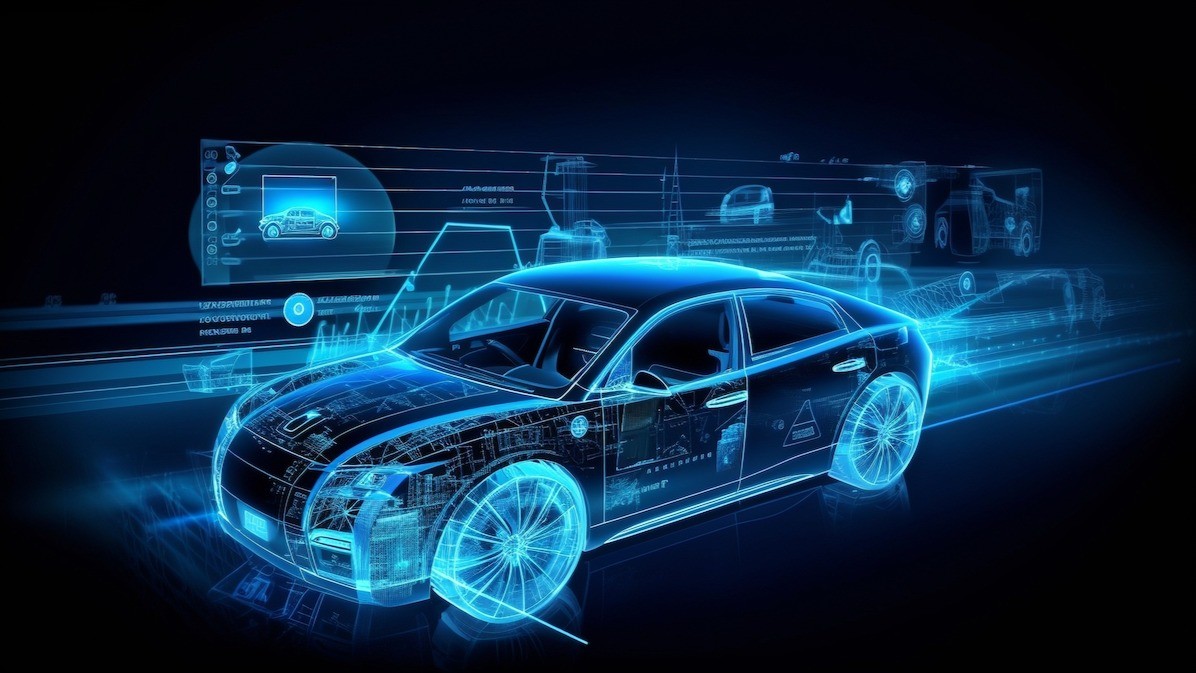
The automotive industry is experiencing its most profound structural transformation since Henry Ford introduced the moving assembly line. For over a century, cars were defined almost exclusively by mechanical engineering: horsepower, engine displacement, chassis rigidity, and transmission gear ratios. Today, mechanical hardware is taking a backseat to lines of code. We have entered the era of the Software-Defined Vehicle (SDV) a paradigm shift where software manages vehicle functionality, controls performance characteristics, enables real-time feature upgrades, and redefines the relationship between driver, vehicle, and manufacturer.
Rather than remaining a static appliance that degrades in capability from the day it leaves the dealership lot, an SDV operates like a smartphone on wheels. Through continuous Over-the-Air (OTA) software deployments, a vehicle purchased today can become safer, faster, more efficient, and more capable tomorrow.
1. What Exactly Is a Software-Defined Vehicle?
To understand how software-defined vehicles alter the driving experience, one must first understand what makes an SDV fundamentally different from traditional automobiles. In legacy automotive design, vehicles relied on dozens sometimes up to 100 standalone Electronic Control Units (ECUs). Each ECU was a dedicated mini-computer designed to execute a single task: controlling the anti-lock braking system (ABS), managing power windows, regulating climate control, or adjusting engine timing. These systems operated in silos, interconnected by complex and heavy wiring harnesses, with little to no central coordination or capacity for significant remote software updates.
An SDV replaces this decentralized complexity with a centralized, domain-based or zonal electronic and electrical (E/E) architecture. High-Performance Computers (HPCs) act as the central brain of the vehicle, running sophisticated operating systems that manage high-level logic, cloud connectivity, artificial intelligence, and real-time sensory data processing.
The core tenets defining an SDV include:
A. Decoupled Hardware and Software: Software lifecycle management is decoupled from physical hardware design cycles, allowing features to be developed, tested, and deployed at cloud-speed rather than waiting for 3 to 5-year automotive hardware cycles.
B. Centralized High-Performance Computing: Consolidating dozens of isolated ECUs into a few powerful zonal controllers connected via high-speed Automotive Ethernet.
C. Continuous Connectivity: Constant cloud integration enabling bidirectionally synced telematics, fleet analytics, edge computing, and remote updates.
D. Service-Oriented Architecture (SOA): Vehicle functions are structured as modular software services that can communicate seamlessly across different modules.
2. Evolution of the In-Cabin Driving Experience
The most immediate and tangible change for everyday drivers occurs inside the cabin. Traditional dashboards were populated with physical knobs, analog dials, and static infotainment units that felt outdated within a couple of years of purchase. Software-defined architecture turns the cabin into an immersive digital living room.
Modern digital cockpits integrate high-resolution displays spanning the width of the dashboard, powered by advanced graphics engines. Driver interaction has shifted away from mechanical switches toward contextual touch interfaces, voice-activated artificial intelligence assistants, and natural gesture detection.
Key drivers of this in-cabin transformation consist of:
A. Personalized User Profiles: When a driver approaches the vehicle, facial recognition cameras or smartphone digital keys immediately load individual preferences adjusting seating positions, mirror angles, climate preferences, ambient lighting colors, and preferred media streaming playlists.
B. Context-Aware Navigation and Predictive AI: AI algorithms process real-time traffic data, battery charge levels, elevation profiles, and historical driving behaviors to optimize routing and predict charging stops automatically.
C. Augmented Reality (AR) Head-Up Displays: Projecting directional arrows, lane guidance markers, speed limits, and hazard warnings directly onto the driver’s line of sight on the windshield.
D. Consoles for Productivity and Entertainment: With the vehicle parked or charging, the dashboard display transforms into an interactive workstation for video conferencing, media streaming, or gaming via integrated cloud platforms.
3. Over-the-Air (OTA) Updates: Cars That Get Better with Age
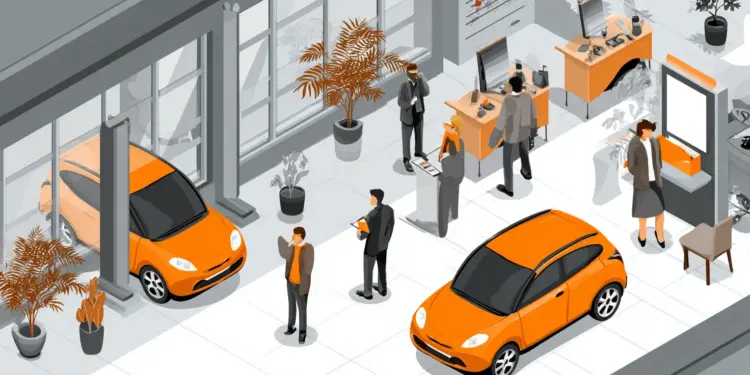
Historically, car ownership followed a predictable depreciation path. The moment you drove a new vehicle off the dealer lot, its value dropped, and its feature set remained locked in time. If a manufacturer developed a better fuel-mapping algorithm, improved traction control, or refined interface graphics, you had to buy the next model year to enjoy those benefits.
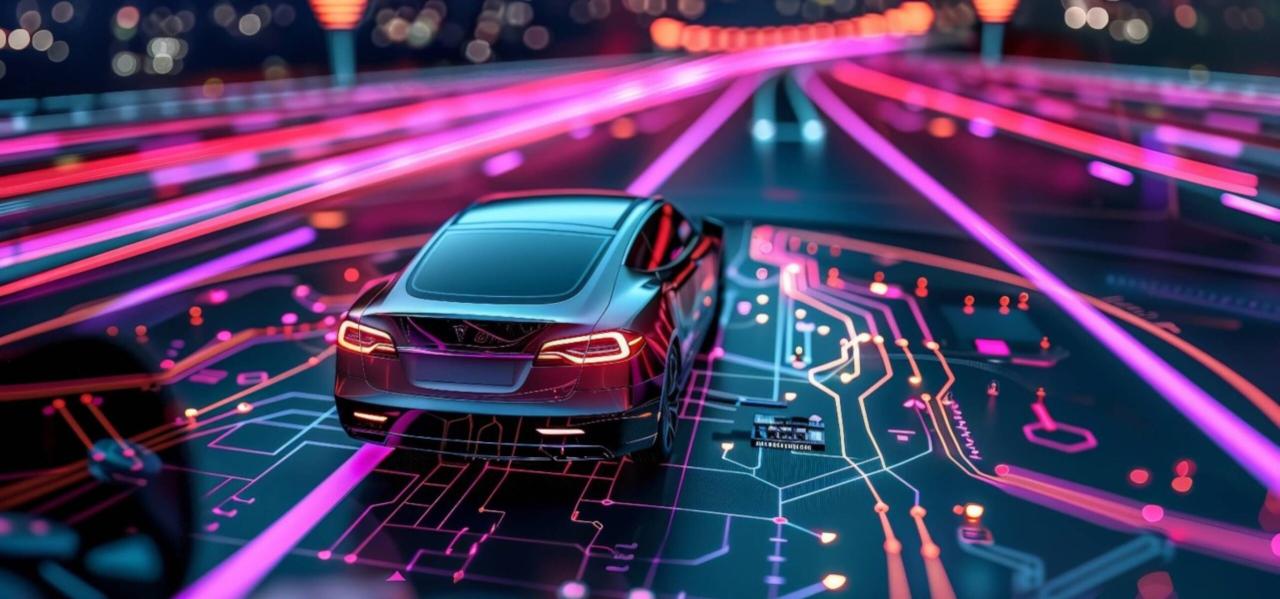
OTA updates have completely flipped this dynamic on its head. SDVs utilize two primary types of remote software delivery:
A. SOTA (Software-Over-The-Air): Delivers application-level updates, including infotainment refinements, map updates, media application upgrades, and bug fixes for digital user interfaces.
B. FOTA (Firmware-Over-The-Air): Upgrades deeper control logic governing propulsion systems, battery management systems (BMS), thermal efficiency, steering feel, suspension tuning, and Advanced Driver Assistance Systems (ADAS).
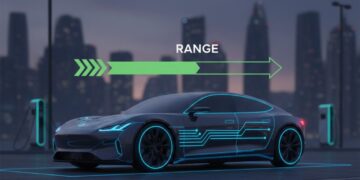
Through FOTA updates, automotive engineering teams can analyze fleet data from real-world driving conditions, discover optimizations, and deploy firmware patches globally. For example, EV makers have routinely increased battery range by 3% to 5%, decreased 0-60 mph acceleration times, and shortened braking distances purely by flashing updated software to existing vehicles overnight.
4. Revolutionizing Vehicle Safety and ADAS
While entertainment and convenience updates garner media attention, the most critical impact of software-defined vehicles lies in active safety and autonomous capabilities. Legacy safety systems were reactive—airbags deployed during an impact, and basic anti-lock brakes engaged when wheel slip was detected. Modern SDVs utilize active perception systems that anticipate and prevent collisions before they occur.
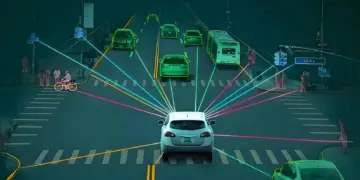
SDVs synthesize data from a dense array of sensors, including ultrasonic sensors, long-range radars, high-definition cameras, and LiDAR units. Centralized compute modules run neural networks that map the environment surrounding the vehicle hundreds of times per second.
The safety progression enabled by software includes:
A. Predictive Hazard Avoidance: Systems scan multiple vehicles ahead to detect sudden deceleration, automatic emergency braking triggers, or slippery road conditions, alerting the driver before the hazard becomes visually apparent.
B. Dynamic Blind-spot Mitigation: Rather than merely flashing an indicator light on a side mirror, an SDV can active-steer or apply differential braking if a driver attempts a lane change into an occupied blind spot.
C. Automated Highway Driving: Combining adaptive cruise control with active lane centering, automatic lane changing, and speed adjustments based on road curvature and speed sign recognition.
D. Continuous Safety Learning: When an SDV encounters an unusual traffic scenario or near-miss event, anonymous sensor logs are transmitted to cloud servers. Engineers refine the safety algorithms using machine learning and push updated safety models back to the global vehicle fleet.
5. Economic Shifts: Subscriptions, Features-on-Demand, and Business Models
The shift toward software definition is fundamentally disrupting the automotive industry’s traditional business model. Historically, automakers generated revenues through one-time hardware sales, supplemented by post-sale replacement parts and dealer service networks. As software becomes the primary value driver, OEMs (Original Equipment Manufacturers) are transitioning toward recurring revenue models.
Features-on-Demand (FoD) allow consumers to purchase or subscribe to physical and digital capabilities as needed, rather than selecting fixed options packages at the dealership.
Examples of emerging business structures include:
A. Performance Upgrades: Subscription or one-off payments to unlock additional electric motor horsepower, torque output, or adaptive suspension modes.
B. Comfort Features on Demand: Seasonal activation of heated seats, heated steering wheels, or advanced dynamic climate control profiles.
C. Advanced Autonomy Tiers: Monthly subscriptions to access hands-free highway driving or automated parking valet services.
D. Data-Driven Telematics Services: Customized usage-based auto insurance models where premiums are calculated based on real-time driving behavior, braking habits, and operational metrics.
While recurring subscriptions offer automakers stable financial predictability, they also spark consumer debates regarding ownership rights. Customers naturally question paying recurring fees for hardware features—like seat heaters—that are physically installed in the vehicle at the factory. Striking the right balance between value-added software services and basic hardware utility remains a critical challenge for automotive marketing strategists.
6. The Technical Foundation: Cloud Computing and Edge Processing
To maintain smooth operation, an SDV relies on a hybrid computing model that bridges edge computing inside the car with cloud infrastructure.
+-------------------------------------------------------------------+
|                        CLOUD INFRASTRUCTURE                       |
|   (Fleet Analytics, Machine Learning Training, SOTA/FOTA Storage) |
+-------------------------------------------------------------------+
                                  ^
                                  | High-Speed 5G / Satellite
                                  v
+-------------------------------------------------------------------+
|                    HIGH-PERFORMANCE CENTRAL COMPUTE               |
|            (Zonal Controllers, Autonomous Driving Logic)          |
+-------------------------------------------------------------------+
      |                           |                           |
      v                           v                           v
+-------------+            +-------------+            +-------------+
| Zone 1: ADAS|            | Zone 2: EV  |            | Zone 3: Body|
| Sensors     |            | Drivetrain  |            | & Cabin     |
+-------------+            +-------------+            +-------------+
Edge processing handles low-latency, safety-critical operations locally. Steering inputs, emergency braking commands, and pedestrian detection algorithms cannot afford the latency associated with sending data to cloud servers and waiting for a response. These calculations take place within milliseconds directly inside the vehicle’s High-Performance Compute modules.
Conversely, non-time-critical tasks—such as voice recognition training, long-term predictive maintenance models, traffic pattern aggregation, and digital twin management—are offloaded to cloud environments.
Cloud-edge synergy enables several key functions:
A. Digital Twins: Virtual replicas of individual physical vehicles hosted in the cloud. By analyzing sensor metrics streaming from the real car, the digital twin models component wear, predicting brake pad or battery cell degradation before mechanical failure occurs.
B. Fleet-Wide Telematics: Aggregating driving data across millions of miles to pinpoint software edge cases, environmental stress factors, and hardware durability trends.
C. Seamless Content Handoff: Transitioning media streaming, navigation routing, and digital assistant sessions directly from a home smart device to the vehicle as the user opens the car door.
7. Critical Challenges Facing the SDV Revolution
Despite the massive potential of software-defined vehicles, the transition away from traditional mechanical architecture presents significant engineering, regulatory, and security hurdles.
The most pressing industry obstacles include:
A. Cybersecurity Vulnerabilities: Expanding a vehicle’s digital surface area and internet connectivity creates potential attack vectors for malicious actors. Remote exploits targeting steering, braking, or powertrain controllers present severe safety risks. Automakers are adopting zero-trust software architectures, encrypted CAN bus communications, intrusion detection systems (IDS), and end-to-end cryptographic verification to safeguard vehicles against cyberattacks.
B. Software Quality and Complexity: Modern SDVs run on upwards of 100 million to 150 million lines of code—far exceeding the code complexity of modern commercial aircraft. Managing, testing, and debugging software stacks of this scale requires automotive companies to re-engineer their entire software development lifecycle, adopting agile workflows and continuous integration/continuous deployment (CI/CD) pipelines.
C. Legacy Organizational Structures: Traditional automakers spent over a century optimizing mechanical engineering supply chains. Shifting corporate culture to prioritize software architecture, user experience design, and cloud engineering requires massive organizational restructuring and talent acquisition.
D. Regulatory Frameworks: Global regulatory bodies are updating homologation standards to govern dynamic software updates. Ensuring that a FOTA update pushed to a vehicle after sale complies with safety regulations across multiple international jurisdictions demands rigorous validation standards.
8. What Lies Ahead for the Future of Driving?
As software-defined architectures mature, the act of driving will continue its evolution toward full vehicle autonomy and mobility-as-a-service (MaaS). When human drivers are no longer strictly required to keep their hands on the wheel and eyes on the road, the vehicle interior will transition completely into an extensible digital environment.
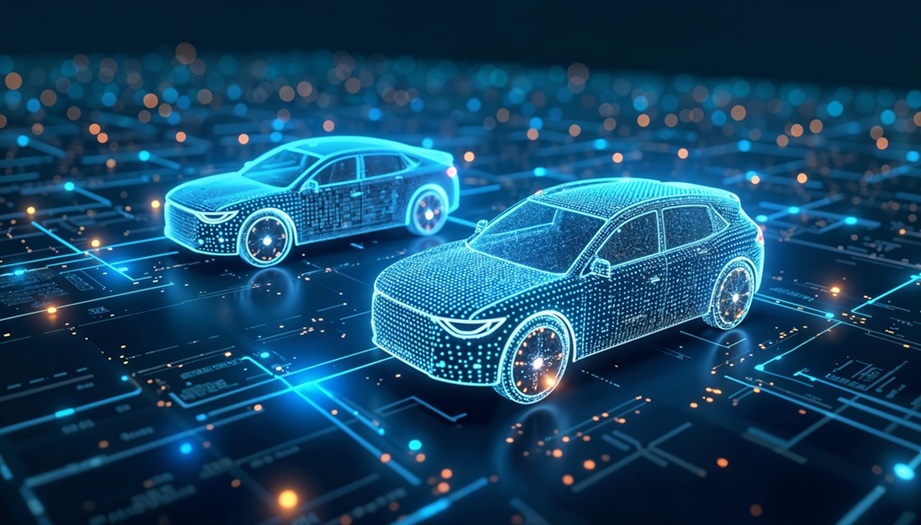
In the near future, SDVs will communicate not only with cloud servers, but also directly with each other and surrounding infrastructure via Vehicle-to-Everything (V2X) protocols.
V2X communication promises to deliver:
A. Vehicle-to-Vehicle (V2V): Cars broadcasting position, speed, acceleration, and braking intent to neighboring vehicles, virtually eliminating collisions at blind intersections.
B. Vehicle-to-Infrastructure (V2I): Cars communicating with traffic light networks to optimize speed corridors, reducing stop-and-go traffic congestion and lowering energy consumption.
C. Vehicle-to-Pedestrian (V2P): Detecting pedestrians and cyclists via smartphone signal location to prevent low-visibility accidents in urban centers.
D. Vehicle-to-Grid (V2G): Electric SDVs intelligently coordinating with energy grids to charge when renewable energy supply is high and feed electricity back into the grid during peak demand hours.
Summary: The Final Shift
The software-defined vehicle is not a temporary industry trend; it is the permanent blueprint for modern automotive engineering. By shifting the vehicle’s primary value driver from mechanical hardware to adaptable software code, automakers are delivering vehicles that are safer, smarter, more personalized, and inherently continuous in their development cycle.
As connectivity networks expand, artificial intelligence models evolve, and centralized computing architectures mature, the humble automobile will no longer be viewed as a tool to travel from point A to point B. It has become an intelligent mobility companion, constantly learning, updating, and redefining what it means to drive.