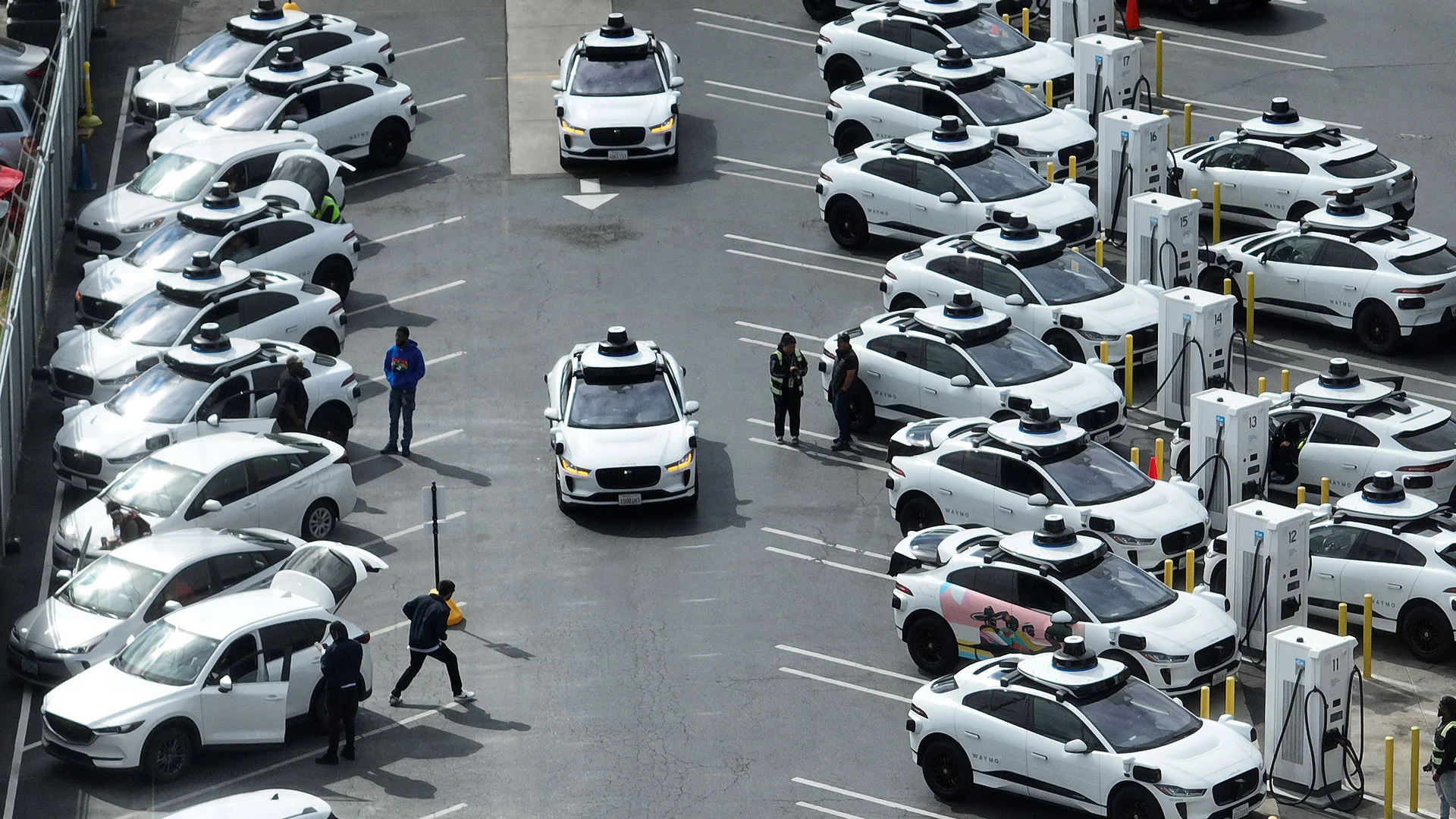
The global transportation market is witnessing an unprecedented paradigm shift. Urban mobility, once dominated by human-operated vehicles, is transitioning into a fully autonomous landscape where driverless robotaxis navigate complex city grids with minimal human intervention. While the economic promise of shared autonomous electric vehicles remains vast, the foundational pillar of this industry is road safety.
Over the past few years, public skepticism and high-profile technical failures posed severe hurdles to widespread adoption. However, recent technological leaps have elevated the safety profile of autonomous vehicles far beyond average human driving standards. High-performance artificial intelligence, multi-layered sensor hardware, and sophisticated fail-safe software architectures are rewriting the rules of modern transit.
Understanding these safety breakthroughs requires analyzing the core technologies that allow driverless systems to sense, decide, and act faster than any human operator could ever dream of.
1. Multi-Modal Sensor Fusion and Edge Perception
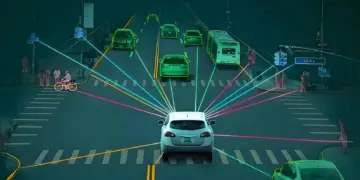
The foundation of autonomous robotaxi safety begins with environmental perception. Early autonomous platforms relied heavily on single sensor modalities, leaving them vulnerable to weather disruptions, blinding light, or unexpected visual obstructions. Modern robotaxis utilize a deeply integrated, multi-modal sensor fusion approach.
  +-------------------------------------------------------+
  |              PERCEPTION SENSOR SUITE                  |
  +-------------------------------------------------------+
  |  A. High-Resolution Solid-State LiDAR                  |
  |  B. 4D High-Definition Imaging Radar                  |
  |  C. Multi-Angle Ultra-HD Vision Cameras               |
  |  D. Ultrasonic Proximity Arrays                       |
  +-------------------------------------------------------+
                            |
                            v
  +-------------------------------------------------------+
  |             CROSS-MODAL FUSION ENGINE                 |
  |     (Real-Time Semantic & Spatial Data Processing)    |
  +-------------------------------------------------------+
By combining complementary technologies, robotaxis achieve 360-degree environmental awareness regardless of ambient light or harsh weather conditions.
A. Solid-State LiDAR Arrays
Unlike early mechanical spinning LiDAR units, modern solid-state LiDAR sensors contain no moving parts. They generate high-density 3D point clouds at rapid refresh rates, allowing the vehicle to detect objects, pedestrians, and road debris hundreds of meters away with millimeter precision.
B. 4D High-Definition Imaging Radar
Radar technology has evolved from simple distance measuring to 4D spatial imaging. High-definition radar penetrates fog, heavy rain, dust, and darkness, capturing velocity, distance, elevation, and azimuth simultaneously.
C. Multi-Angle Ultra-HD Cameras
Advanced vision suites capture vivid optical data, enabling the system to read traffic signals, interpret dynamic road signage, and recognize subtle non-verbal cues from pedestrians or traffic control personnel.
D. Ultrasonic Proximity Sensors
Positioned along the lower bumpers, these close-range sensors provide redundant detection for tight parking maneuvers, sudden curb obstacles, and low-lying pets.
2. Artificial Intelligence and Large World Models
Hardware sensors produce raw data, but artificial intelligence converts that data into contextual driving choices. The integration of Large World Models (LWMs) and Vision-Language-Action (VLA) models represents one of the most critical safety breakthroughs in modern autonomous driving.
Traditional machine learning algorithms struggled with “edge cases”—rare, chaotic scenarios that developers could not easily pre-program into the software. Large World Models solve this limitation by enabling the system to reason semantically about its surrounding environment.
Key Innovation: If a robotaxi encounters an unexpected obstacle—such as an overturned delivery truck, an emergency vehicle on fire, or a construction detour—a Large World Model allows the vehicle to understand the context of the situation. It can safely navigate around the hazard using semantic logic rather than freezing or abruptly stopping in the middle of traffic.
Furthermore, modern AI architectures split decision-making into dual processing streams:
A. Fast-Thinking Engine
Operates at sub-millisecond intervals to handle reactive controls like emergency braking, immediate lane centering, and sudden collision avoidance.
B. Slow-Thinking Engine
Processes high-level routing, contextual spatial mapping, predictive pedestrian movement, and multi-step tactical planning through complex traffic bottlenecks.
3. Hardware Redundancy and Fail-Safe Architectures
A primary safety standard for Level 4 driverless vehicles is ensuring that no single point of failure can lead to a catastrophic accident. Industrial automotive engineering dictates that if a critical component malfunctions, a secondary system must immediately take over to maintain vehicle stability.
| System Layer | Primary Hardware | Redundant Backup | Fail-Safe Standard |
| Steering Control | Electronic Power Steering A | Dual-Winding Motor B | ISO 26262 ASIL-D |
| Braking Power | Electro-Hydraulic Primary | Electro-Mechanical Secondary | Independent Power Rail |
| Compute Units | Main AI System SoC | Isolated Parallel Processing Board | Real-Time Health Diagnostics |
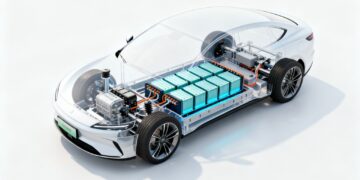
| Power Distribution | Primary High-Voltage Li-ion | Auxiliary 12V Solid-State Battery | Dual-Loop Circuit Bus |
A. Dual-Winding Steering Actuators
If an electronic fault occurs within the primary steering controller, the secondary winding energizes instantly without causing any loss of directional control.
B. Decentralized Hydraulic and Mechanical Braking
The vehicle uses two completely independent braking systems connected to separate power sources. If one circuit suffers a pressure drop or loss of electrical power, the secondary system brings the vehicle to a controlled stop.
C. Parallel Compute Processing
Robotaxis run duplicate compute systems side-by-side. If system diagnostics flag an unexpected hardware fault on the primary system board, the backup system seamlessly assumes operational command.
D. Minimal Risk Condition (MRC) Protocols
When an irrecoverable multi-system failure occurs, the autonomous software executes an automated Minimal Risk Condition maneuver. The vehicle signals its intent, gently pulls over to a safe shoulder or curb, engages hazard lights, and comes to a complete stop off the active road.
4. Vehicle-to-Everything Communication Networks
While on-board sensors give robotaxis exceptional sight within their immediate line-of-sight, Vehicle-to-Everything (V2X) wireless networking allows vehicles to “see” beyond visual obstacles.
                +------------------------------+
                |    TRAFFIC SIGNAL & TOWER    |
                |        (V2I - Infra)         |
                +------------------------------+
                               ^
                               |
                               v
+------------------+   5G-C-V2X LINK   +------------------+
| NEARBY ROBOTAXI  | <---------------> | TARGET ROBOTAXI  |
|   (V2V - Fleet)  |                   |  (Host Vehicle)  |
+------------------+                   +------------------+
                               ^
                               |
                               v
                +------------------------------+
                |    PEDESTRIAN SMARTPHONE     |
                |         (V2P - User)         |
                +------------------------------+
A. Vehicle-to-Vehicle (V2V) Coordination
Autonomous vehicles broadcast their velocity, heading, and braking intentions to surrounding fleet units. This real-time synchronization allows groups of robotaxis to merge onto highways seamlessly, preventing zipper-merge accidents and minimizing sudden braking events.
B. Vehicle-to-Infrastructure (V2I) Integration
By connecting directly to smart traffic signals, digital road signs, and city transit hubs, robotaxis receive immediate updates regarding signal light transitions, sudden road closures, and active construction zones long before their cameras physically spot them.
C. Vehicle-to-Pedestrian (V2P) Safety Links
5G cellular V2X protocols can detect signals from pedestrian smartphones or wearables. If a pedestrian steps out from behind a parked truck into a blind spot, the approaching robotaxi receives an alert to slow down prior to visual confirmation.
5. Comparative Performance and Statistical Realities
The ultimate validation of these technological advancements lies in empirical traffic safety data. Comparing human driving metrics against autonomous fleet data highlights the vast difference in collision frequency and severity.
Human drivers are prone to cognitive fatigue, visual distractions, speeding, and impaired driving. In contrast, autonomous systems operate without fatigue, monitor all 360 degrees simultaneously, and adhere strictly to localized speed limits.
Statistical Metric: According to compiled highway safety data, commercial driverless robotaxi fleets record up to 85% to 90% fewer injury-causing accidents per million miles driven when compared to human-operated commercial vehicles navigating the exact same urban corridors.
CRASH RATE INCIDENTS PER MILLION MILES DRIVEN
----------------------------------------------------------------------
Human Drivers      [||||||||||||||||||||||||||||||||||||||||] 100% Baseline
Autonomous Fleets  [|||||] ~10-15% of Human Incident Benchmark
----------------------------------------------------------------------
6. Remote Oversight and Teleoperation Fallbacks
Autonomous vehicles do not operate completely in isolation. To account for rare, unprecedented urban blockages—such as police officers hand-directing traffic through a closed intersection—fleet operators employ Teleoperation and Human-in-the-Loop Assist Networks.
A. Strategic Guidance Override
When a robotaxi encounters a ambiguous scenario that yields high uncertainty, it stops safely and requests strategic guidance from a remote operator. The human operator does not “joystick” or drive the vehicle directly; instead, they draw a clear path around the obstruction on a high-definition map, which the on-board AI evaluates and executes safely.
B. Ultra-Low Latency Fleet Telemetry
Using high-bandwidth 5G network slicing, vehicles stream live panoramic video feed and telemetry back to centralized command centers. Operators monitor system health, fleet efficiency, and dynamic road hazard updates across entire metropolitan zones in real time.
7. Next-Gen Cybersecurity Frameworks
As vehicles transition into software-defined, hyper-connected endpoints, physical safety becomes inextricably linked to digital cybersecurity. Modern robotaxis utilize rigorous hardware-level encryption and behavioral monitoring to defend against malicious cyber intrusions.
A. Hardware Security Modules (HSM)
Critical vehicle control units are equipped with tamper-proof microchips that store cryptographic keys. These chips verify the integrity of all incoming over-the-air (OTA) software updates before executing code updates.
B. In-Vehicle Intrusion Detection Systems (IDS)
An internal network monitor inspects data packets moving across the Controller Area Network (CAN) bus. Any unauthorized command or unexpected signal frequency triggers an immediate isolation sequence, preventing potential interference with driving controls.

The Road Ahead for Autonomous Safety
The relentless pace of engineering innovation has moved driverless mobility from experimental pilot programs into a secure, practical reality. Through multi-modal sensor arrays, advanced Large World Models, comprehensive hardware redundancies, and cellular V2X integration, robotaxis are setting a new standard for global transportation safety. As these autonomous fleets expand across cities worldwide, they bring us closer to a future defined by zero traffic fatalities and seamless urban transit.