The transportation industry is undergoing a monumental paradigm shift. What once existed purely within the realm of speculative science fiction has rapidly matured into a fully realized commercial ecosystem. Autonomous vehicle (AV) technology is no longer merely an experimental project confined to controlled test tracks; it is actively transforming global transit networks, municipal planning, and the logistics domain.
As global roadways become increasingly connected, driverless innovation promises to redefine human mobility. Beyond removing human error from the driving equation, these advancements offer massive economic efficiency, reduced carbon emissions, and unprecedented mobility for non-drivers. Understanding the intricate architecture of next-generation autonomous driving requires exploring the sophisticated sensor hardware, artificial intelligence, cellular networks, and regulatory frameworks powering this historic evolution.
Understanding the SAE Levels of Automation
To comprehend the full scope of autonomous driving innovations, one must first master the standardized classification framework defined by SAE International (Society of Automotive Engineers). This taxonomy categorizes driverless capabilities across six distinct tiers:
-
Level 0 (No Driving Automation): The human operator controls all aspects of dynamic driving. System capabilities are limited to basic warnings or momentary emergency interventions, such as blind-spot alerts or automated emergency braking.
-
Level 1 (Driver Assistance): The vehicle handles a single motion axis—either lateral movement (steering) or longitudinal movement (acceleration/braking)—using systems like adaptive cruise control or lane-keeping assistance. The human driver remains fully engaged.
-
Level 2 (Partial Automation): The platform simultaneous manages steering, acceleration, and deceleration under specific operational conditions. However, the human supervisor must maintain constant visual awareness and remain ready to take manual control at a moment’s notice.
-
Level 3 (Conditional Automation): The vehicle takes over absolute driving control under strict environmental conditions, such as highway traffic jams. The driver is permitted to divert attention from the road but must resume control when requested by the onboard computer.
-
Level 4 (High Automation): The machine operates with complete autonomy within defined geographic zones or specific weather parameters (geofencing). In these zones, human intervention is completely unnecessary, allowing platforms like urban robotaxis to function without safety drivers.
-
Level 5 (Full Automation): The absolute pinnacle of driverless mobility. The vehicle navigates any roadway, under any environmental condition, anywhere on Earth, without requiring pedals, steering wheels, or human input.
Breakthrough Perception and Sensor Hardware Systems
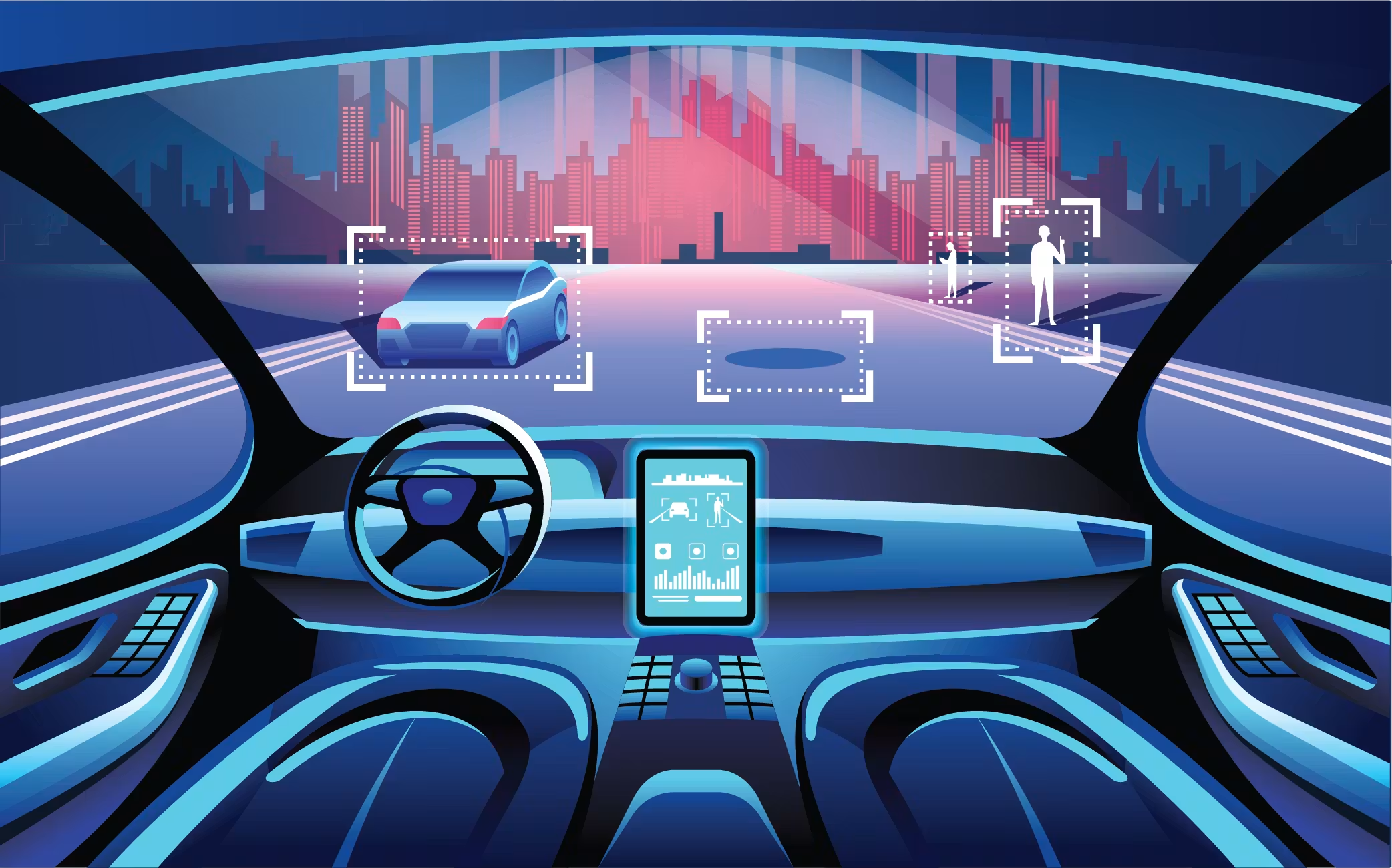
A self-driving platform is only as effective as its perception pipeline. Modern autonomous vehicles construct a real-time, three-dimensional representation of their surroundings by combining diverse sensor modalities. This multi-layered array eliminates single-point hardware failures while compensating for the physical limitations of individual sensor types.
A. Solid-State LiDAR Infrastructure
Light Detection and Ranging (LiDAR) functions by emitting rapid pulses of laser light and measuring the precise time required for those photons to bounce off surrounding objects. Traditional mechanical LiDAR systems required heavy, rotating roof mounts with mechanical wear points. Modern advancements have shifted the market toward solid-state LiDAR.
Solid-state arrays feature zero moving parts, integrating entire laser emitters and optical receivers directly onto silicon microchips. This structural leap drastically improves physical durability against road vibrations while cutting unit production costs dramatically. The high-density point clouds produced by modern LiDAR units enable vehicles to detect subtle obstacles hundreds of meters away in total darkness.
B. High-Definition 4D Imaging Radar
Traditional millimeter-wave radar excels at detecting target velocity and distance, even through heavy rain, dense fog, or blinding snowstorms. However, legacy radar lacked the spatial resolution to distinguish static objects, such as a stalled vehicle beneath an overhead highway sign.
The introduction of 4D imaging radar resolves this limitation by adding elevation (height) data alongside azimuth (horizontal angle), range, and Doppler velocity. By mapping thousands of points per frame, 4D radar bridges the gap between traditional radar and LiDAR, offering high-resolution spatial awareness that functions reliably through severe atmospheric degradation.
C. High-Resolution Optical Camera Arrays
Visual perception remains a mandatory core element of autonomous sensing. Modern vehicles carry multi-camera setups featuring high dynamic range (HDR) sensors, high frame rates, and wide-angle lenses.
Cameras are the primary tool for reading text-based road signs, recognizing traffic light color states, identifying emergency vehicle flashing lights, and interpreting lane markings. When paired with advanced computer vision pipelines, optical arrays generate dense visual depth maps that serve as a foundational layer for spatial navigation.
D. Sensor Fusion Architectures
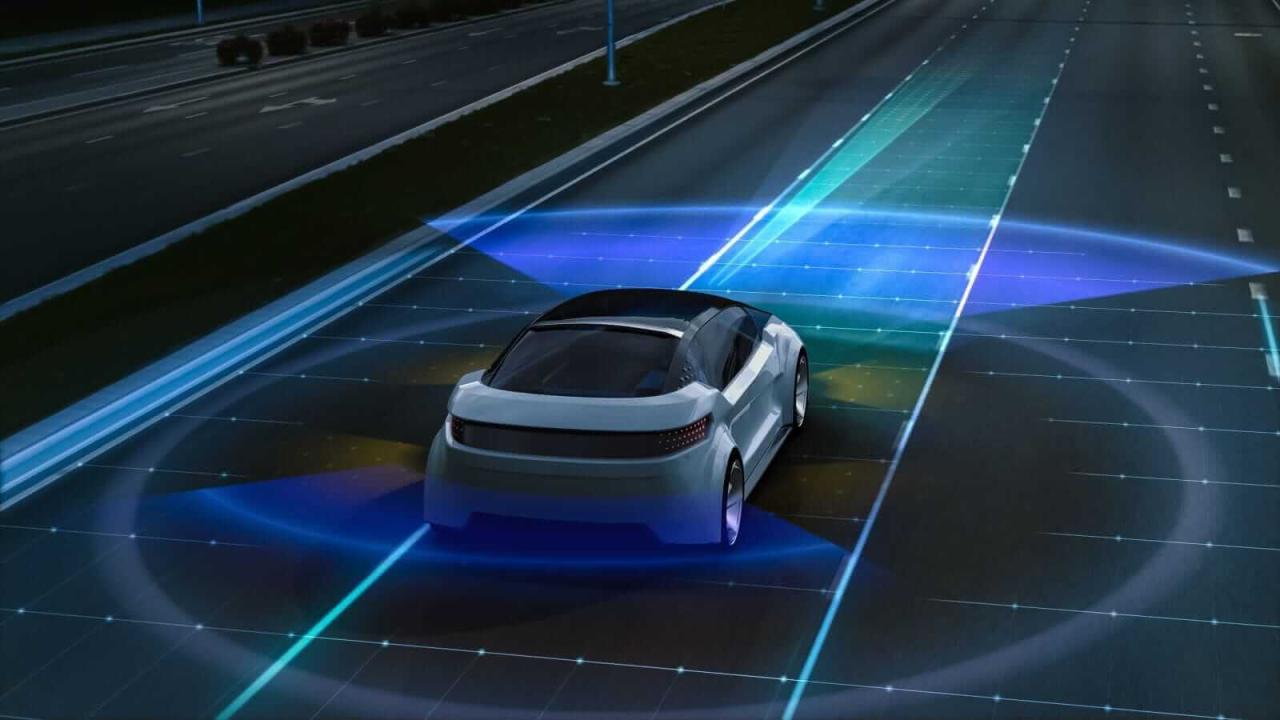
No individual sensor modality provides flawless performance across every climate and physical situation. Camera optics struggle in blinding glare or thick fog; radar lacks fine spatial edge resolution; LiDAR performance degrades in heavy rain or snowfall.
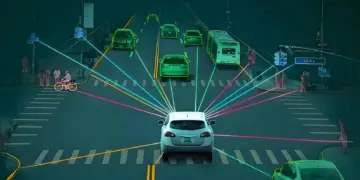
To achieve total situational awareness, engineers utilize multi-sensor fusion. Central processing units combine raw data streams from cameras, radar, and LiDAR at the software level. By fusing these inputs into a single coherent environmental model, the driving system eliminates perceptual ambiguities and operates with redundant safety margins.
Artificial Intelligence and Next-Gen Software Architectures
While hardware sensors act as the sensory organs of an autonomous vehicle, artificial intelligence represents the central nervous system. Early self-driving platforms relied on rigid, hand-coded rules and modular software pipelines. Today, AI-driven architectures have revolutionized vehicle intelligence, decision-making, and motion planning.
A. Vision-Language-Action (VLA) and World Models
The most pivotal software evolution in modern autonomous driving is the adoption of Vision-Language-Action (VLA) models and Large World Models (LWM). Legacy software struggled when encountering rare road events often referred to as “edge cases” such as unusual construction detours, custom hand gestures from traffic directors, or debris falling from cargo trucks.
VLA systems integrate deep vision perception with natural language reasoning, allowing the vehicle to understand complex context semantically. Instead of merely detecting a physical shape as an generic obstacle, a VLA-enabled vehicle understands that a “downed powerline with sparks” requires a wide detour route, even if the lane ahead appears visually open. World Models simulate physics, human behavioral intent, and environmental dynamics, giving vehicles the ability to predict multiple future traffic outcomes seconds before they happen.
B. End-to-End Neural Networks
Industry leaders are shifting from traditional modular software where perception, mapping, path planning, and vehicle actuation are separate codebases toward end-to-end neural network models.
In an end-to-end configuration, raw sensor data (such as camera video feeds) enters a deep neural network, which directly calculates steering angles, throttle applications, and braking pressure. Trained on vast datasets containing billions of real-world driving miles, these neural networks learn intuitive human driving behaviors, smooth motion dynamics, and complex spatial maneuvers without relying on brittle hand-crafted rulesets.
C. Continuous Over-the-Air (OTA) Learning
Modern software-defined vehicles continuously improve long after leaving the manufacturing line. When a vehicle encounters an unusual road scenario, anonymized visual logs are transmitted via high-speed telemetry back to cloud data centers.
These real-world edge cases are automatically added to central training clusters, where supercomputers train refined neural network weights. Once validated, updated driving models are deployed back to global vehicle fleets via Over-the-Air (OTA) software updates, allowing millions of cars to instantly gain expertise from a single vehicle’s experience.
Vehicle-to-Everything (V2X) Communication Networks
Individual vehicle intelligence is significantly amplified when cars communicate directly with their surrounding environment. Vehicle-to-Everything (V2X) connectivity uses ultra-low latency cellular networks (C-V2X) to transform solitary automobiles into nodes within a collaborative intelligent transportation grid.
+-------------------------------------------------------------------+
|                     V2X CONNECTIVITY NETWORK                      |
+-------------------------------------------------------------------+
                                  |
     +-----------------+----------+----------+-----------------+
     |                 |                     |                 |
     v                 v                     v                 v
+---------+       +---------+           +---------+       +---------+
|   V2V   |       |   V2I   |           |   V2P   |       |   V2N   |
| Vehicle |       | Infra-  |           | Pedes-  |       | Network |
|   to    |       | structure           | trian   |       |   to    |
| Vehicle |       |         |           |         |       | Cloud   |
+---------+       +---------+           +---------+       +---------+
A. Vehicle-to-Vehicle (V2V) Communication
V2V connectivity enables surrounding vehicles to broadcast real-time telemetry, including location coordinate vectors, velocity, braking activity, and directional trajectories. This direct wireless dialogue allows vehicles to anticipate hazard situations long before onboard optical sensors physically see them. For example, if a car three positions ahead executes an aggressive emergency stop, trailing V2V-equipped vehicles apply corrective braking instantly, completely preventing chain-reaction highway collisions.
B. Vehicle-to-Infrastructure (V2I) Integration
V2I connects self-driving systems directly to smart municipal hardware. Roadside Units (RSUs), digital traffic signals, and highway management hubs continuously transmit timing data and localized hazard alerts to approaching traffic. Vehicles can adjust cruising speeds to pass through green traffic lights consistently, optimizing fuel efficiency and smoothing overall urban traffic flow.
C. Vehicle-to-Pedestrian (V2P) Safety Protocols
V2P interfaces protect vulnerable road users, including pedestrians, cyclists, and scooter riders. Through personal smartphone connectivity or wearable smart devices, V2P networks alert nearby vehicles to pedestrian presence—even when individuals step out from behind parked vehicles into blind spots.
D. Vehicle-to-Network (V2N) Telemetry
V2N links driverless fleets directly to cloud computing platforms and dynamic routing engines. Vehicles receive real-time data covering localized weather events, road construction detours, and live traffic congestion, enabling software-defined platforms to dynamically optimize navigation paths across entire metropolitan regions.
Redundancy, Fail-Safe Systems, and Safety Engineering
Deploying fully autonomous platforms onto public streets requires fault-tolerant hardware architectures. If an essential mechanical component fails in a human-driven car, the human operator applies physical steering or manual braking. In a Level 4 or Level 5 system, the vehicle architecture itself must feature complete hardware redundancy to ensure continuous functional safety.
+-------------------------------------------------------------------+
|               HIGH-AVAILABILITY REDUNDANT ARCHITECTURE            |
+-------------------------------------------------------------------+
                                  |
     +----------------------------+----------------------------+
     |                                                         |
     v                                                         v
+-------------------------------+       +-------------------------------+
|         PRIMARY SYSTEM        |       |        SECONDARY SYSTEM       |
|  - Main Compute Compute Node  |       |  - Auxiliary Backup Compute   |
|  - Primary Steering Motor A   |       |  - Secondary Steering Motor B |
|  - Master Brake Circuit A     |       |  - Backup Brake Circuit B     |
|  - Main Battery Architecture  |       |  - Isolated Secondary Battery |
+-------------------------------+       +-------------------------------+
A. Dual Power Grid Distribution
Self-driving vehicles utilize isolated power architectures. Primary compute clusters, sensor networks, and mechanical actuators draw power from a main battery bus, while a secondary, completely independent backup battery remains isolated. If a main power failure or short circuit occurs, the auxiliary power grid instantly engages without system reboot latency, maintaining system stability.
B. Redundant Steering and Braking Actuation
Steering columns and braking modules integrate dual-wound electric motors and independent control circuits. Should the primary steering actuator experience a hardware fault, the secondary steering motor assumes directional control immediately. Similarly, electronic braking systems feature dual hydraulic backup loops capable of bringing the vehicle to a safe, controlled stop.
C. Fail-Operational vs. Fail-Safe Protocols
Legacy electronic control systems were designed as “fail-safe”—meaning that upon encountering an unrecoverable fault, the system disengaged and returned control to a human driver.
High-level autonomous platforms are engineered as “fail-operational.” In the event of a critical software crash, sensor loss, or hardware failure, the secondary redundant computing hardware assumes command, allowing the vehicle to execute a Minimal Risk Maneuver (MRM). The system autonomously signals lane changes, navigates away from active traffic lanes, and stops safely along the road shoulder.
Urban Mobility and Commercial Fleet Integration
The initial widespread deployment of high-level driverless innovation is transforming commercial transportation, urban transit networks, and regional freight logistics.
A. Urban Robotaxi Deployment
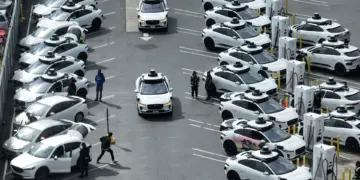
Autonomous ride-hailing networks are operating across major global metropolitan centers. Replacing human drivers with centralized autonomous fleets drastically lowers operational cost per mile, bringing down urban transit expenses for consumers. Robotaxis optimize vehicle utility, remaining on the road continuously while reducing inner-city demand for dedicated parking structures.
B. Autonomous Middle-Mile and Long-Haul Trucking
While passenger urban mobility faces complex pedestrian interactions, long-haul freight logistics benefits from predictable highway routes. Autonomous Class 8 commercial trucks are transforming regional supply chains. Operating on designated highway corridors, driverless trucks operate round-the-clock without fatigue limitations, significantly accelerating delivery schedules while reducing freight transit expenses.
+-------------------------------------------------------------------+
|               AUTONOMOUS LOGISTICS TRANSFER HUB                   |
+-------------------------------------------------------------------+
                                  |
     +----------------------------+----------------------------+
     |                                                         |
     v                                                         v
+-------------------------------+       +-------------------------------+
|       LONG-HAUL HIGHWAY       |       |       LAST-MILE DELIVERY      |
|  - Autonomous Class 8 Trucks  |       |  - Autonomous Micro-Shuttles  |
|  - Highway Corridor Transit   | =====>|  - Delivery Drones & Pods     |
|  - Terminal-to-Terminal Runs  |       |  - Neighborhood Distribution  |
+-------------------------------+       +-------------------------------+
C. Last-Mile Micro-Delivery Platforms
The rapid growth of e-commerce has accelerated demand for last-mile delivery innovations. Compact autonomous delivery pods and sidewalk-navigating robots handle short-range residential logistics. Operating at low speeds along sidewalks and urban streets, these compact platforms transport food orders, medical supplies, and retail packages, cutting inner-city traffic congestion and delivery emissions.
Societal, Economic, and Environmental Transformations
The widespread integration of autonomous transportation systems yields profound societal benefits, extending far beyond simple driver convenience.
A. Drastic Reductions in Roadway Fatalities
According to global transit statistics, over 90% of motor vehicle collisions are caused by human error—including distraction, fatigue, impaired driving, and reckless speed choice. By deploying perception architectures that never tire, lose focus, or drive impaired, autonomous software platforms have the potential to eliminate millions of annual traffic accidents worldwide.
B. Urban Space Redesign and Architectural Shifts
Modern cities dedicate vast land areas to parking lots, multi-story garages, and roadside spaces. As shared autonomous fleets reduce private vehicle ownership, inner-city parking infrastructure can be reclaimed. Urban planners can repurpose unnecessary parking real estate into public green parks, affordable residential developments, and pedestrian-friendly commerce zones.
C. Reduced Emissions and Eco-Driving Optimization
Most next-generation autonomous platforms are constructed on fully electric vehicle (EV) architectures. Beyond zero tailpipe emissions, autonomous control algorithms execute driving profiles superior to human operators. By smoothing acceleration curves, optimizing cruising speeds, and eliminating stop-and-go congestion cycles through V2I routing, driverless systems significantly lower energy usage per trip.
D. Expanded Mobility for Underserved Populations
Autonomous transportation restores independence for individuals unable to operate traditional automobiles—including elderly citizens, individuals with visual or physical impairments, and rural communities lacking public transit. Automated shuttle networks ensure equitable access to essential services, medical care, and employment opportunities.
Regulatory, Ethical, and Cybersecurity Challenges
Despite impressive technological achievements, full worldwide adoption of autonomous driving requires resolving major non-technical challenges.
A. Global Regulatory Standardization
Regulatory frameworks across different nations remain fragmented. Automakers must navigate varying safety testing requirements, operational permits, and regional certification processes. Establishing unified, international safety standards is essential to streamline global mass production and deployment.
B. Liability, Insurance, and Legal Frameworks
Shifting operational control from human drivers to software algorithms alters traditional automotive liability. In collisions involving Level 4 or Level 5 systems, legal liability transitions away from personal vehicle insurance toward hardware manufacturers, software developers, and fleet operators. Insurance providers are developing updated policies specifically tailored to software fault coverage and platform risk profiles.
C. Algorithmic Ethics and Decision Paradigms
In unavoidable collision scenarios, autonomous software must make split-second operational decisions. Defining the ethical frameworks programmed into motion-planning algorithms requires ongoing collaboration between engineers, ethicists, legal experts, and public policymakers to ensure transparent, accountable decision-making.
D. Advanced Automotive Cybersecurity
Connected, software-defined vehicles present new potential attack vectors for malicious cyber actors. Safeguarding modern driverless platforms requires multi-layered security architectures, including encrypted bus communications, hardware security modules (HSM), intrustion detection systems (IDS), and continuous vulnerability monitoring via remote security patches.
Summary Table: Autonomous Driving Technologies Compared
| Technology Element | Primary Function | Core Hardware / Software | Primary Advantage | Operational Challenge |
| Solid-State LiDAR | High-density 3D spatial mapping | Silicon laser emitters, photodetectors | Precise distance measurements in complete darkness | Performance degradation in heavy rain or snow |
| 4D Imaging Radar | All-weather speed and elevation tracking | Millimeter-wave transceivers | Penetrates dense fog, rain, and environmental debris | Lower point-cloud resolution compared to LiDAR |
| Vision-Language Models | Contextual reasoning and edge-case interpretation | Deep transformer neural networks, GPUs | Synthesizes physical visual scenes with complex semantic rules | High real-time compute requirements and power consumption |
| C-V2X Networks | Cooperative vehicle & infrastructure communication | 5G NR modems, Roadside Units (RSU) | Anticipates road hazards beyond direct line-of-sight | Requires widespread public infrastructure investment |
| Fail-Operational Systems | System redundancy for uninterrupted control | Dual power grids, redundant steering/braking motors | Maintains vehicle control during hardware component failure | Increases manufacturing complexity and vehicle weight |
Conclusion
The evolution of autonomous driving represents one of the most profound technological achievements in human history. By uniting solid-state sensor arrays, cutting-edge AI architectures, high-speed V2X connectivity, and fault-tolerant redundant hardware, self-driving innovations are actively redefining world transit.
While regulatory harmonization, legal liability standards, and cybersecurity protections remain critical focus areas, the momentum driving autonomous mobility is unstoppable. As technology continues to mature, driverless systems will drastically reduce traffic fatalities, clean urban environments, optimize logistics, and deliver accessible mobility for communities across the globe. The future of transportation has arrived it is safer, cleaner, and completely autonomous.