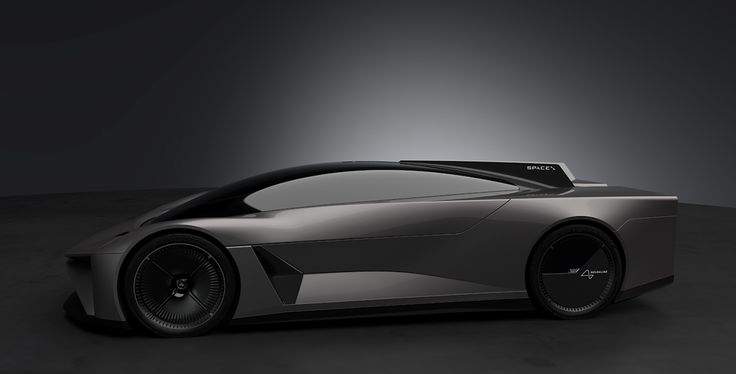
Imagine navigating rush-hour traffic, changing lanes, or finding the perfect parking spot without ever touching the steering wheel, pressing a pedal, or even speaking a command. Your intention alone is enough. This is not a scene from a science-fiction novel but a tangible horizon being charted by the convergence of neurotechnology and automotive innovation, spearheaded by ventures like Elon Musk’s Neuralink. The concept of telepathically controlling your vehicle represents a paradigm shift so profound it redefines the relationship between human intention, machine operation, and mobility itself. Moving beyond the current trajectory of autonomous self-driving cars, brain-computer interface (BCI) technology proposes a future where the car becomes a seamless extension of the driver’s cognitive and nervous system. This comprehensive exploration delves into the mechanics, implications, challenges, and breathtaking possibilities of a world where Neuralink, or analogous advanced BCI systems, could grant us telepathic command over our automobiles. We will dissect the journey from thought to motion, the technological hurdles, the safety and ethical labyrinths, and the ultimate potential to revolutionize accessibility and redefine human transportation.
The Foundational Science: Decoding Thought into Digital Command
At the core of telepathic vehicle control lies the brain-computer interface. To understand its automotive application, one must first grasp how it translates the ephemeral nature of thought into actionable data.
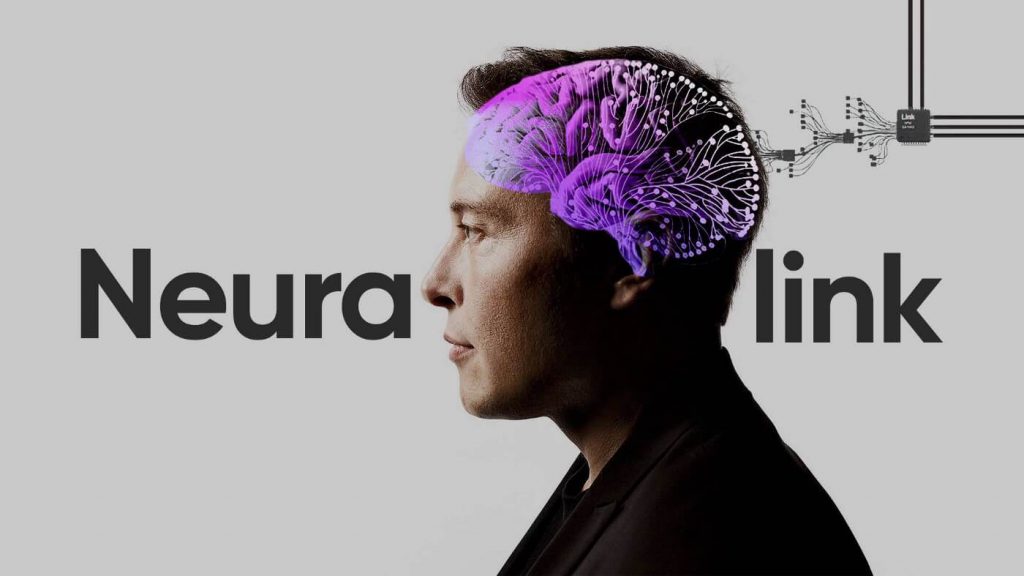
A. The Neural Landscape: The human brain is a vast network of approximately 86 billion neurons. Every thought, intention, and command is the result of complex electrochemical signaling between these neurons. When you think “turn left,” a specific pattern of neuronal firing occurs in the motor cortex and associated planning regions.
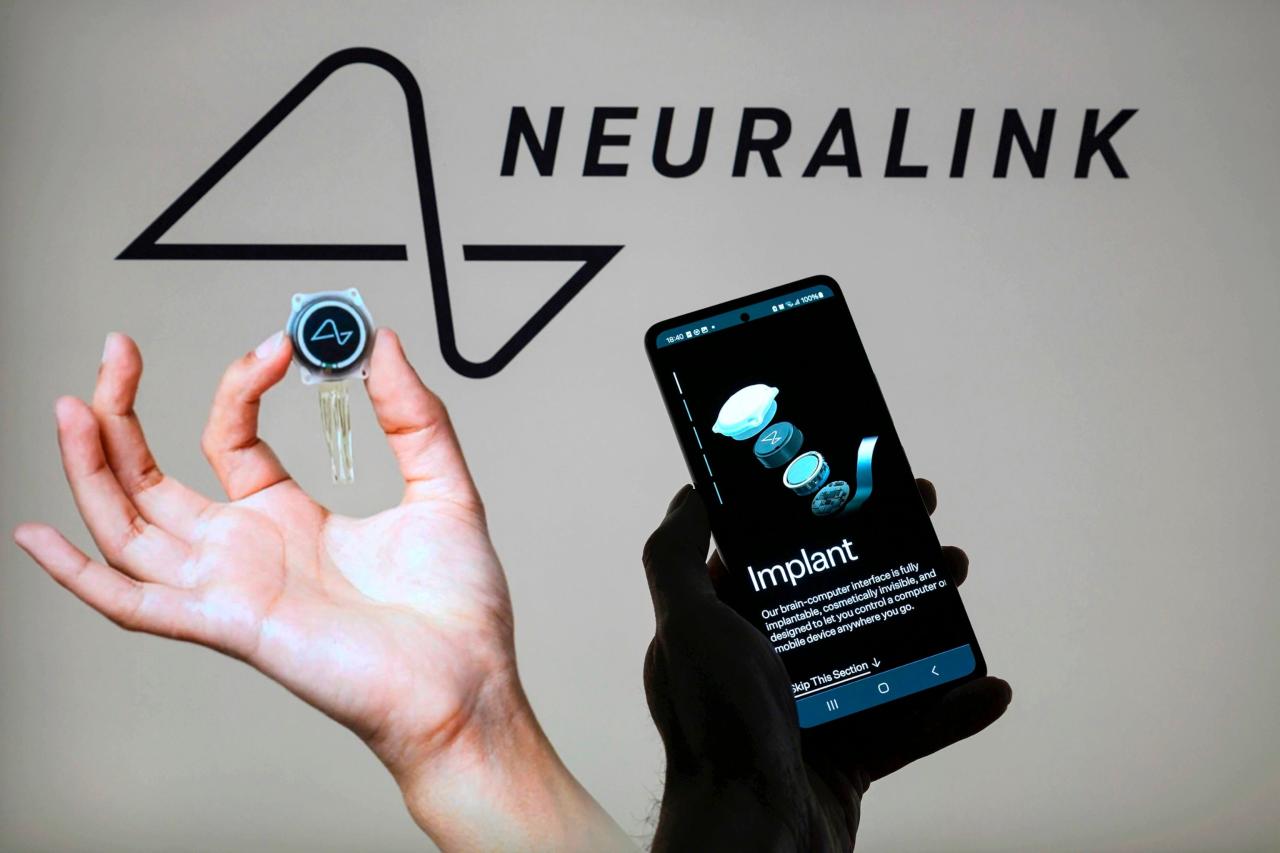
B. The Interface Hardware: Neuralink’s approach involves ultra-fine, flexible polymer threads embedded with electrodes, surgically implanted into the brain by a specialized robotic surgeon. These “threads” are designed to be minimally invasive, targeting specific neural regions with high precision to read electrical impulses. An inductive, battery-powered device called the “Link” sits flush with the skull, wirelessly transmitting this neural data.
C. The Translation Layer: The raw neural data is a cacophony of signals. Advanced machine learning algorithms and neural decoding software act as interpreters. They are trained, often through user calibration where the individual imagines specific actions, to recognize the unique “signature” of thoughts like “accelerate,” “brake,” “signal,” or “navigate home.” This decoded intention is then converted into a clean, digital command signal.
D. Vehicle Integration: This digital command is transmitted via a secure, ultra-low-latency wireless protocol (like future-generation Bluetooth or a dedicated neural-frequency band) to the vehicle’s onboard computer system. This system would need a sophisticated API (Application Programming Interface) to accept BCI commands, integrating them as the highest-priority input, superseding manual controls when activated.
From Thought to Asphalt: The User Experience Paradigm
The driver’s experience in a BCI-integrated vehicle would be fundamentally different from any current driving paradigm, blending conscious control with subconscious augmentation.
A. The Calibration and Personalization Phase: Before the first telepathic drive, users undergo a calibration process. In a simulator or stationary vehicle, they would mentally rehearse commands while the AI learns their unique neural patterns. This creates a personalized “neural profile,” much like a biometric key.
B. Conscious Command Control: For direct vehicle maneuvering, the driver would focus on clear, intentional commands. A thought-sequence for overtaking might be: Focus on the left lane -> Mental command “check blind spot” (triggering a camera feed directly to the user’s visual cortex or display) -> Confirm “signal left” -> Command “gradual acceleration and lane change.” The vehicle executes with machine precision.
C. Subconscious Integration and Feedback: The most profound interaction may be subconscious. The system could monitor neural states associated with stress, fatigue, or distraction. If it detects drowsiness, it could autonomously enhance safety protocols or suggest taking over. Haptic feedback from the road could be subtly communicated not through the seat, but through gentle neural stimulation, creating an intuitive “feel” for the vehicle’s traction.
D. Multitasking and Accessibility Revolution: This system enables true hands-free, voice-free operation. A driver could physically enjoy a meal, engage with passengers, or manage other tasks while maintaining perfect vehicular control through thought. For individuals with severe physical disabilities, this technology offers unprecedented autonomy, transforming a vehicle into a chariot of liberation controlled by the mind alone.
Technical Hurdles and Monumental Challenges
The path to a consumer-ready telepathic driving system is fraught with scientific, engineering, and software challenges that dwarf the development of current autonomous vehicles.
A. Latency: The Non-Negotiable Imperative: Neural signaling is incredibly fast. Any delay between thought and vehicular response beyond a few tens of milliseconds would feel disconcerting and unsafe. This requires not only instantaneous neural decoding but also a communication and vehicle actuation system with near-zero lag. Current CAN bus systems and wireless protocols may need complete re-engineering.
B. Signal Fidelity and Decoding Complexity: The brain is not a digital switchboard. The “turn left” signal is not isolated; it’s buried in a storm of other neural activity about the music playing, a memory, or planning dinner. Isolating the precise command signal from this “noise” with perfect accuracy is a monumental AI challenge. Misinterpretation could have dire consequences.
C. Bi-directional Safety Protocols: A robust, fail-safe architecture is critical. What happens if the neural link degrades, the user has a seizure, or the signal is jammed? The vehicle must have multiple, redundant fallback systems: immediate transition to full autonomous mode (SAE Level 5), manual override accessibility, and a suite of traditional controls as a backup. The BCI must be a control option, not the sole control method.
D. Long-Term Stability and Adaptation: The brain is plastic; it changes and adapts. Neural signals for a specific command might drift over time. The implanted hardware must remain biocompatible for decades without causing scarring (glial encapsulation) that degrades signal quality. The software must continuously and passively recalibrate to the user’s evolving neural patterns.
The Ethical, Security, and Privacy Abyss
Beyond engineering, telepathic vehicle control opens a Pandora’s Box of ethical and societal questions that demand rigorous preemptive frameworks.
A. The Ultimate Privacy Invasion: A BCI capable of driving a car has access to the innermost sanctum of human privacy: our unspoken thoughts. The data stream includes not just driving commands, but potentially associated thoughts, emotional states, and subconscious patterns. Who owns this data? How is it stored, secured, and used? Could insurers demand access to neural data after an accident? The potential for misuse is unprecedented.
B. Brain-Hacking and Cybersecurity: If a vehicle’s system is connected to the internet for updates and navigation, it creates a potential attack surface for malicious actors. The nightmare scenario of “brain-hacking” where a threat actor takes control of the neural commands or injects disruptive signals moves cybersecurity from a financial nuisance to a direct threat to physical and mental integrity. Encryption and security must be military-grade and potentially quantum-resistant.
C. Liability in the Event of Failure: In a crash, is the driver liable for a “thought error”? Is the manufacturer liable for a software glitch in the neural decoder? Is the BCI company liable for a faulty implant? The legal framework for liability becomes incredibly complex when the control mechanism is a proprietary interpretation of a user’s private neural activity.
D. Cognitive Equity and Access: Will this create a new divide between the “neuro-enhanced” who can afford such technology and the average driver? Could it be mandated for certain professions? The questions of access, equity, and potential societal pressure to adopt such an invasive technology are profound.
The Roadmap: From Lab to Highway
The realization of this technology will not be an overnight event but a gradual integration over decades, likely progressing through distinct phases.
A. Phase 1: Augmented Driver Monitoring (Present – 2030): Initial applications will be passive. BCIs will monitor driver fatigue, cognitive load, and distraction in commercial fleets (trucking, aviation) or high-performance scenarios, providing alerts or enabling semi-autonomous takeover when needed. No direct vehicle control exists.
B. Phase 2: Secondary Function Control (2030 – 2040): Direct BCI control begins with non-critical secondary functions: adjusting climate control, changing radio stations, answering calls, or inputting navigation destinations through thought. This builds user trust and refines decoding algorithms in low-risk environments.
C. Phase 3: Primary Control in Limited Domains (2040 – 2050+): Telepathic control for primary driving functions becomes available, but initially in highly constrained environments private campuses, dedicated “neuro-lanes” on highways, or off-road recreational applications. Full public road integration would require exhaustive regulatory approval.
D. Phase 4: Symbiotic Driving Ecosystem (2050+): The final stage envisions a seamless mesh of BCI control, full vehicle autonomy, and smart infrastructure. The driver can choose to drive telepathically for pleasure, delegate to autonomy in traffic, or enter a hybrid mode where the car handles micro-adjustments while the human provides high-level directional intent. The car and driver act as a single cognitive unit.
Conclusion: The Mind as the Ultimate Key
The prospect of telepathically controlling a car via Neuralink or its successors sits at the extreme frontier of human-machine symbiosis. It promises a future of unparalleled convenience, a revolution in accessibility for the disabled, and a reclamation of the joy of driving through pure intention. Yet, it simultaneously demands that we confront our deepest questions about privacy, identity, security, and what it means to be in control. The technological hurdles latency, decoding, safety are immense but potentially surmountable. The ethical and societal hurdles may prove far more complex to navigate. As we stand at this crossroads, one truth becomes clear: the journey toward telepathic driving is not merely about getting from point A to point B more efficiently. It is a journey into the very core of our own consciousness, challenging us to define where we end and our technology begins. The road ahead is long and uncharted, but it leads to a destination where the ultimate vehicle interface is not a wheel or a touchscreen, but the boundless landscape of the human mind itself.