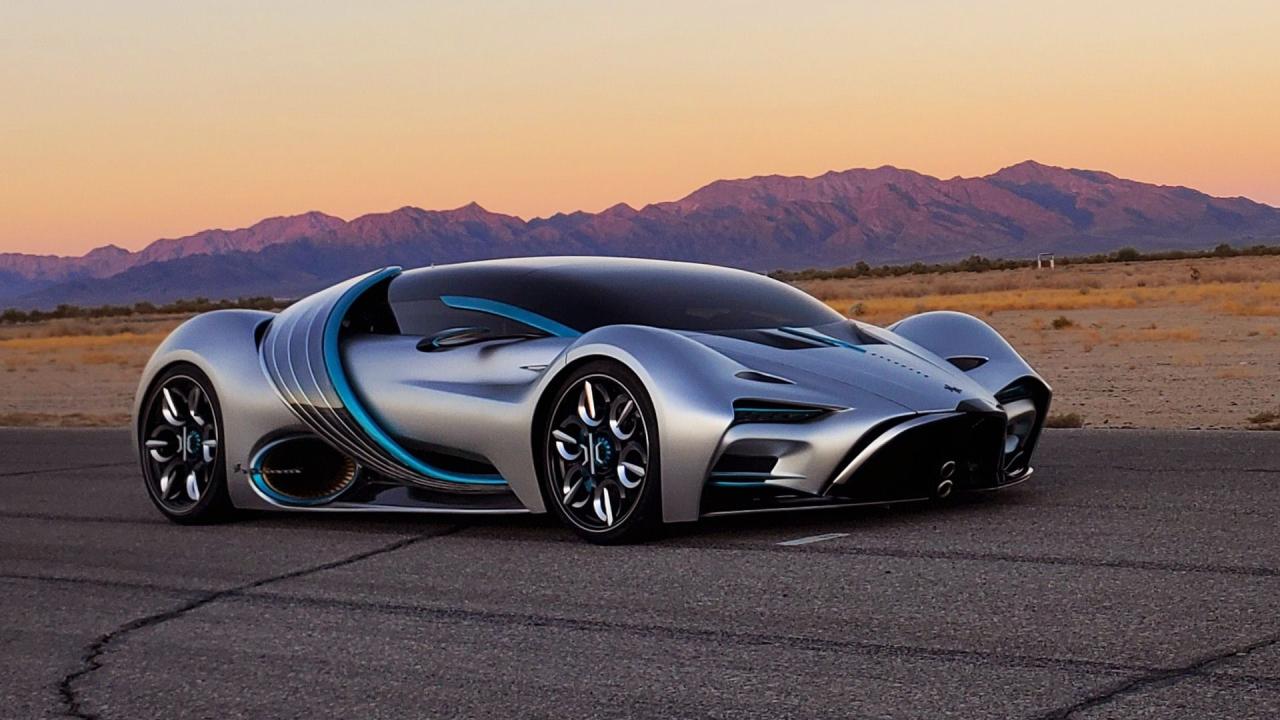
The automotive world stands at a pivotal crossroads, where the relentless pursuit of speed is now inextricably linked with the imperative of sustainability. For decades, the roar of a supercar’s engine, powered by combusted fossil fuels, was the definitive symphony of performance. However, a new, nearly silent contender has emerged from the pits, not with a roar, but with a whisper of pure innovation. Recently, a groundbreaking hydrogen-powered hypercar didn’t just enter the arena; it dominated it, shattering preconceived speed records and, in the process, redefining the very boundaries of what eco-conscious engineering can achieve. This isn’t merely a news flash; it is a seismic event that signals a potential paradigm shift in high-performance mobility, blending blistering speed with a clean environmental conscience.
A. Deconstructing the Record-Shattering Machine: More Than Just a Fast Car
To understand the magnitude of this achievement, one must look beyond the headline-grabbing top speed figure. This hydrogen hypercar represents a confluence of several cutting-edge technologies, each pushing the envelope of material science and automotive design.
A. The Powertrain: A Dual-Path to Power
Unlike conventional internal combustion engines or even battery-electric vehicles (BEVs), this hypercar employs a sophisticated hybrid system centered on hydrogen.
-
Fuel Cell Stack: The heart of the system is a high-output hydrogen fuel cell stack. Here, stored hydrogen gas (H₂) from onboard tanks combines with oxygen (O₂) from the air in a electrochemical reaction. This process generates electricity to power the motors, with water vapor (H₂O) as the only tailpipe emission.
-
Electric Motors: The electricity produced drives multiple bespoke electric motors, often one at each wheel (quad-motor setup), providing instantaneous torque, breathtaking acceleration, and unprecedented torque-vectoring control.
-
Hybrid Battery: Crucially, the vehicle also incorporates a relatively small but high-power battery pack. This battery handles sudden power demands for acceleration, captures energy through regenerative braking, and supplements the fuel cell’s output, ensuring instantaneous throttle response without lag.
B. Advanced Chassis and Aerodynamics:
The chassis is typically a monocoque constructed from carbon-fiber composites and other space-age materials like titanium and aerospace-grade aluminum, achieving an exceptional strength-to-weight ratio. The aerodynamics are not an afterthought but the cornerstone of its design. Every curve, vent, and wing is computationally optimized for maximum downforce to keep the car planted at extreme speeds, with minimal drag coefficients that rival the most efficient aircraft. Active aerodynamics components that move in real-time adjust the car’s profile for optimal stability and cooling.
C. Hydrogen Storage: The Engineering Marvel
Storing enough hydrogen for high-performance use is a monumental challenge. This hypercar utilizes state-of-the-art Type IV carbon-fiber-reinforced pressure vessels. These tanks are incredibly strong and lightweight, capable of safely holding hydrogen at pressures of 700 bar (10,000 psi) or more. The placement of these tanks is strategic, often positioned low and along the car’s center tunnel, to create a optimal, low center of gravity that enhances handling agility.
B. The Significance of the Speed Record: Why This Milestone Matters
Breaking a speed record with hydrogen power is far more than a publicity stunt. It serves as a powerful, tangible proof-of-concept with far-reaching implications.
A. Shattering the “Green is Slow” Stereotype:
For years, a persistent narrative suggested that eco-friendly vehicles were compromises slow, dull, or lacking in passion. This hydrogen hypercar obliterates that myth. By achieving speeds that rival or surpass the fastest fossil-fuel and electric supercars, it proves unequivocally that sustainability and extreme performance are not mutually exclusive. It makes “green” exciting and aspirational.
B. A Viable Alternative to Battery-Electric for High Performance:
While BEVs have dominated the conversation on zero-emission transport, they face challenges in high-performance applications: weight from massive battery packs, heat management during sustained high output, and long recharge times. Hydrogen fuel cell technology, as demonstrated here, offers distinct advantages: rapid refueling (comparable to gasoline), consistent performance without degradation from heat, and a lighter overall powertrain system for its energy capacity, which is critical for handling and agility.
C. Accelerating Technological Trickle-Down:
The extreme demands of motorsport and hypercar development have historically driven innovation that eventually benefits consumer vehicles. Technologies like disc brakes, turbocharging, and advanced aerodynamics all followed this path. The advancements in fuel cell durability, hydrogen storage safety, power management software, and lightweight materials developed for this hypercar will inevitably filter down to make future hydrogen-powered sedans, SUVs, and trucks more efficient, affordable, and reliable.
C. The Hydrogen Ecosystem: Challenges and the Road Ahead
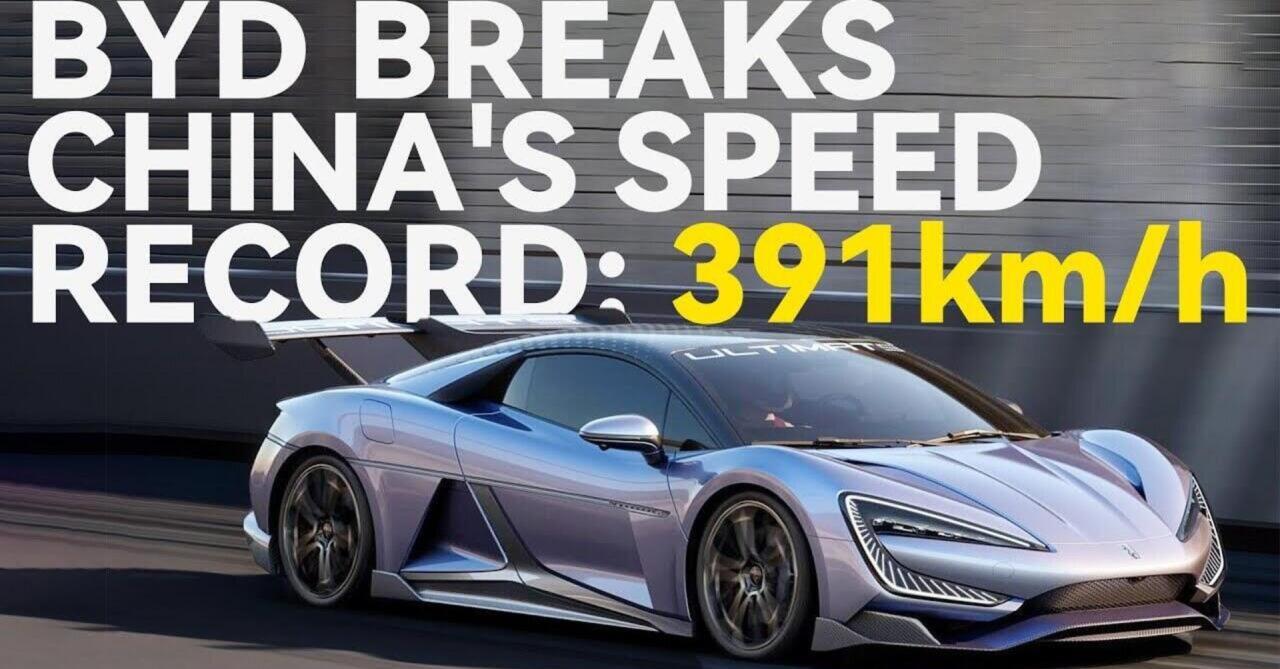
The hypercar itself is a masterpiece, but it does not exist in a vacuum. Its success highlights both the promise and the existing hurdles of the hydrogen economy.
A. The “Green Hydrogen” Imperative:
For hydrogen to be truly clean, it must be produced using renewable energy, a process called electrolysis, resulting in “green hydrogen.” Currently, most hydrogen is “grey,” produced from natural gas, which has a significant carbon footprint. The hypercar’s environmental credentials are only as strong as the hydrogen it uses. This underscores the urgent need for massive global investment in renewable energy infrastructure specifically for green hydrogen production.
B. Infrastructure: The Refueling Desert
The most significant barrier to widespread hydrogen adoption, even for consumer vehicles, is the lack of refueling stations. Building a comprehensive, safe, and cost-effective hydrogen refueling network requires enormous capital investment and cross-industry collaboration between automakers, energy companies, and governments. The hypercar’s success adds urgency to this challenge, proving the demand for high-quality fuel is coming.
C. Cost and Scalability:
The technology in this hypercar is astronomically expensive. The fuel cell stack, carbon-fiber hydrogen tanks, and advanced materials carry a premium price tag. The journey now involves finding ways to scale production and reduce costs through innovation and economies of scale, making the technology accessible beyond the realm of multi-million-dollar hypercars.
D. Hydrogen vs. Electric: A Complementary Future, Not a War
The rise of the hydrogen hypercar often sparks debate: is this the beginning of the end for battery-electric vehicles? A more nuanced perspective reveals they are likely complementary technologies serving different needs.
A. The Case for Battery-Electric (BEVs):
BEVs are exceptionally efficient for daily commuting, urban driving, and shorter trips. The charging infrastructure, while still growing, is more developed than hydrogen in most regions. For the average consumer with home charging access, a BEV is a practical and highly efficient zero-emission solution.
B. The Case for Hydrogen Fuel Cell (FCEVs):
As demonstrated by the hypercar, FCEVs excel in applications demanding high energy density, rapid refueling, and minimal weight penalty. This makes them ideal not just for hypercars, but also for long-haul trucking, maritime transport, aviation, heavy machinery, and fleet vehicles that cannot afford lengthy downtime for charging.
C. A Multi-Pronged Strategy:
The goal is decarbonization, not the victory of one technology. A smart, sustainable future likely involves a mix: BEVs for personal urban mobility and hydrogen FCEVs for heavy-duty, long-range, and high-performance applications. The competition between them drives innovation in both camps, benefiting the entire ecosystem.
E. Beyond the Track: The Broader Impact on Motorsport and Automotive Culture
This record-breaking run sends shockwaves far beyond engineering labs.
A. The Future of Motorsport:
Major racing series like Formula 1, Le Mans, and others are actively exploring sustainable fuel regulations. Hydrogen racing series, such as the MissionH24 project at Le Mans, are already in development. This hypercar paves the way for a new era of zero-emission motorsport where the spectacle and competition remain, but the environmental cost plummets.
B. Changing the Narrative of Desire:
Automotive passion has long been tied to the sound and smell of gasoline. This hypercar challenges that emotional connection, offering a new kind of desire one rooted in intelligent design, silent but devastating power, and the pride of driving a machine that represents the cutting edge of human ingenuity aimed at preserving the planet. It makes sustainability a core performance metric.
Conclusion: The Dawn of a New Performance Era

The shattering of the speed record by a hydrogen hypercar is far more than a fleeting headline. It is a beacon, illuminating a viable and thrilling path forward for the automotive industry. It stands as a testament to human ingenuity, proving that the twin peaks of astronomical performance and environmental responsibility can be scaled simultaneously. The challenges of infrastructure, green hydrogen production, and cost reduction are substantial, but the proof of concept is now irrefutable. This hypercar is not the end goal; it is the starting pistol for the next great race the race to democratize this technology and integrate it into a cleaner, faster, and more sustainable mobility landscape for all. The revolution is no longer coming; it has just lapped the competition.