
The recent groundbreaking legalization of commercial hoverbikes in several pioneering nations has sent unprecedented shockwaves through the global automotive and transport sectors. This isn’t a minor regulatory adjustment; it is a foundational shift that challenges over a century of established ground-based transportation paradigms. What many anticipated as a distant sci-fi fantasy has abruptly materialized into a tangible, regulated reality, forcing industry giants, policymakers, and urban planners into a frenzied recalibration of the future. This comprehensive analysis delves into the multifaceted implications, the intricate technology powering this revolution, and the profound challenges and opportunities that lie ahead as we stand on the precipice of a true three-dimensional mobility era.
A. Deconstructing the Modern Hoverbike: Beyond Science Fiction
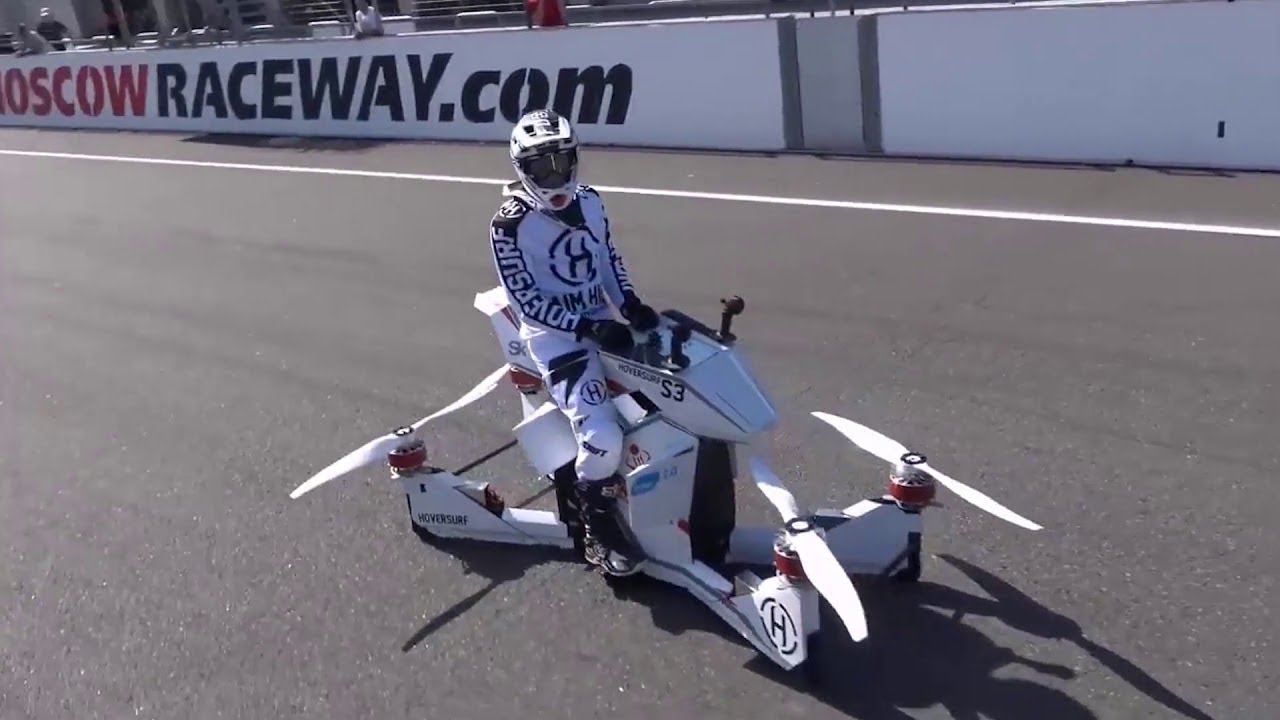
To understand the legal and industrial shock, one must first grasp what a modern hoverbike actually is. These are not anti-gravity devices, but sophisticated descendants of drone and electric aircraft technology.
A.1. Core Propulsion and Design Architecture
Contemporary legal hoverbikes are classified as powered ultralight personal air vehicles, or more technically, as electric vertical take-off and landing (eVTOL) craft in a compact, motorcycle-inspired form. They utilize multiple high-torque electric ducted fans or propellers for lift and propulsion. This distributed electric propulsion (DEP) system offers redundancy if one motor fails, the others can compensate, enhancing safety. The airframes are constructed from advanced carbon-fiber composites and aerospace-grade aluminum, ensuring an exceptional strength-to-weight ratio. Their design prioritizes aerodynamic efficiency for forward flight once transitioned from vertical lift.
A.2. Power and Performance Metrics
The heart of the hoverbike is its high-density battery system, typically lithium-sulfur or solid-state batteries, which offer the necessary energy-to-weight output. Current models boast flight durations between 25 to 45 minutes, with ranges of 50 to 100 kilometers on a single charge, and cruising speeds of 80-130 km/h. Crucially, they are remarkably quiet compared to helicopters, a key factor in their urban legal acceptance. Advanced flight controllers, utilizing a suite of sensors (lidar, radar, GPS, and inertial measurement units), provide stability, obstacle detection, and automated flight path following, making them pilotable with training but not requiring the expertise of a traditional aviator.
B. The Regulatory Earthquake: How Legislation Caught Up
The “stunning” aspect of legalization lies in the unprecedented speed at which forward-thinking regulatory bodies moved to create frameworks, often bypassing traditional, decades-long automotive safety processes.
B.1. Pioneering Regulatory Frameworks
Nations like Singapore, the United Arab Emirates, and Switzerland, along with specific jurisdictions in Japan and the United States, have led the charge. They didn’t merely adapt existing aviation laws; they created new vehicle categories often termed “Personal Aerial Vehicles” (PAVs) or “Urban Air Mobility (UAM) Devices.” These frameworks specify:
-
Vehicle Certification: Mandating rigorous testing for stability, crashworthiness (often including ballistic parachute systems), noise, and electromagnetic interference.
-
Operator Licensing: Introducing a new class of pilot’s license, less arduous than a full private pilot license but more comprehensive than a driver’s license, focusing on three-dimensional navigation, air traffic communication basics, and emergency procedures.
-
Airspace Integration: Designating specific low-altitude corridors (below 500 feet), known as “UAM highways,” using Unmanned Traffic Management (UTM) systems for digital coordination to prevent collisions.
B.2. The Catalyst for Rapid Legalization
Several converging factors forced regulators’ hands. The technological maturity of drone tech proved safety and reliability. Chronic ground traffic congestion in megacities reached a breaking point, demanding radical solutions. Furthermore, intense lobbying and demonstrable prototypes from well-funded startups presented a viable alternative. The legislation effectively creates a controlled sandbox, allowing the technology to evolve in real-world conditions under strict oversight.
C. Tsunami in the Automotive Industry: Winners, Losers, and Strategists
The automotive world’s reaction has been a mixture of panic, opportunity, and strategic pivoting. The assumption of continued road dominance has been shattered.
C.1. Incumbent Automakers: Defensive Agility
Traditional car manufacturers are now engaged in a high-stakes balancing act. Luxury and performance brands are quickly establishing UAM divisions, acquiring hoverbike startups, or partnering with aerospace firms to avoid being perceived as obsolete. The focus is on branding these vehicles as the natural, premium evolution of personal transport. Conversely, mass-market carmakers face an existential threat to their volume-sales model and are investing heavily in autonomous ground vehicles and lobbying for infrastructure parity.
C.2. The New Aerospace Vanguard
A flock of agile startups once viewed as fringe innovators have suddenly become industry titans. Companies like Jetson Aero, Lazareth, and ALI Technologies now hold invaluable intellectual property and first-mover advantage. Their valuations have skyrocketed, and they are attracting talent from both Silicon Valley and traditional aerospace giants like Boeing and Airbus, who are themselves major investors and developers in larger eVTOL “air taxi” platforms.
C.3. Supply Chain Revolution
The ripple effect through the supply chain is monumental. Demand for lithium, rare-earth magnets for motors, and carbon fiber has spiked. Meanwhile, suppliers dedicated to internal combustion engine components, traditional braking systems, and even tire manufacturers are nervously forecasting long-term demand erosion, pushing them to diversify into aerial vehicle components or advanced materials.
D. The Infrastructure Imperative: Building the Skyways
Legalization is just the first step. For hoverbikes to move from novelty to norm, a completely new physical and digital infrastructure, termed “vertiport” networks, must be constructed.
D.1. Vertiports: The New Gas Stations and Parking Lots
These are not airports; they are modular, often rooftop or dedicated tower structures for take-off, landing, charging, and minor maintenance. Key considerations include:
-
Location: Integration with existing transit hubs, commercial buildings, and residential areas.
-
Energy Grid: Requiring high-capacity, fast-charging electrical infrastructure, often powered by renewable sources to maintain the environmental benefit.
-
Safety and Noise Buffering: Designed with specific approach/departure paths and sound-dampening materials.
D.2. The Digital Sky Highway: UTM
The invisible backbone is the Unmanned Traffic Management system. This cloud-based ecosystem will coordinate thousands of low-altitude flights in real-time, handling routing, weather data, congestion management, and emergency prioritization. Its development is a race between government aviation authorities and private tech companies, with significant implications for data security and airspace sovereignty.
E. Societal and Environmental Reckoning: Promise vs. Peril
The hoverbike revolution is not without deep and complex societal debates that will shape its adoption curve.
E.1. The Equity and Accessibility Chasm
There is a acute risk of creating a two-tier transport system: a fast, uncongested aerial network for the wealthy and a grounded, congested one for everyone else. Regulatory bodies are under pressure to mandate accessibility features, explore public hover-share models, and ensure skyways don’t simply become visual markers of inequality.
E.2. Environmental Impact: A Nuanced Picture
While electric hoverbikes promise zero direct emissions, their full lifecycle impact is nuanced. The energy source for electricity is critical. Their manufacturing, particularly battery production, is energy-intensive. However, their potential to drastically reduce ground traffic congestion and the associated idling emissions from millions of cars presents a monumental net positive, provided the energy grid greens concurrently.
E.3. Privacy, Noise, and Psychological Acceptance
The “eye in the sky” phenomenon raises legitimate privacy concerns from constant low-altitude overflight. Zoning laws will need updating. While quieter than helicopters, the persistent hum of dense hoverbike traffic could become a new form of noise pollution. Public acceptance will hinge on demonstrable safety the psychological impact of a potential mid-air failure is far greater than a roadside breakdown.
F. The Road (and Sky) Ahead: Predictions for the Next Decade
The legalization is the starting pistol. The race that follows will define urban landscapes for generations.
F.1. Phased Adoption and Use-Case Expansion
We will see a phased rollout: initial use in logistics and emergency services (where cost-benefit is clear), expanding to premium private ownership and ride-share aerial taxis, before any potential mass-market adoption. Specific applications like border patrol, agricultural monitoring, and inter-campus travel will become commonplace.
F.2. Technological Evolution on the Horizon
Battery technology is the primary limiter. Solid-state batteries with double the energy density are the holy grail. Autonomous flight systems will evolve rapidly, potentially removing the need for a pilot’s license for pre-programmed routes. Advances in materials science will lead to lighter, stronger, and eventually cheaper models.
F.3. The Global Domino Effect
The success in initial adopting countries will pressure others to follow or risk being left behind. The European Union and China are already fast-tracking their own regulations. This will inevitably lead to international standardization efforts for vehicle recognition, pilot licensing reciprocity, and cross-border UTM communication protocols.
Conclusion: A World Redrawn

The legalization of hoverbikes is more than a stunning headline; it is the definitive catalyst for the most significant transportation revolution since the popularization of the automobile. It has forcibly ended the automotive industry’s century of terrestrial monopoly and ignited a fierce competition for the skies. The challenges technological, infrastructural, regulatory, and ethical are Herculean. Yet, the promise of decongesting our cities, reducing transport emissions, and unlocking new dimensions of human mobility is a compelling force. The automotive world is not just stunned; it is being fundamentally, irrevocably rewritten, and the blueprint for our future cities is now being drafted in three dimensions. The age of ground-bound transport is giving way; the age of integrated, multimodal, three-dimensional mobility has officially begun.