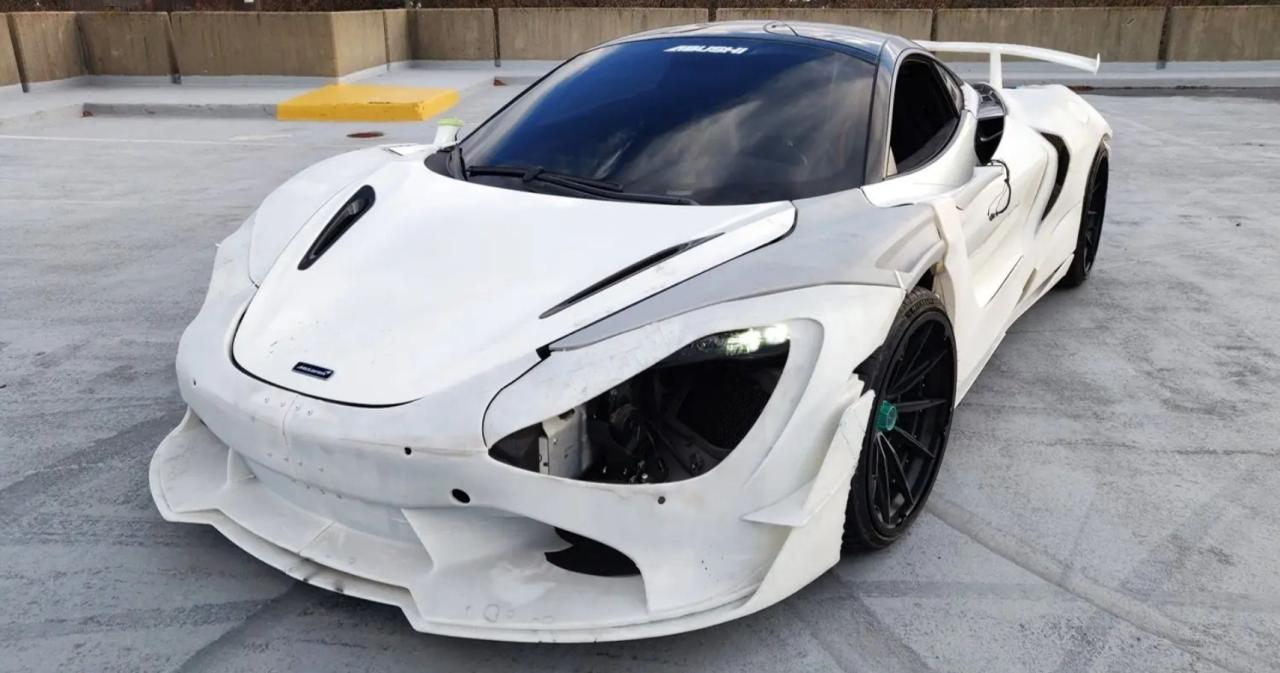
 Imagine a world where purchasing a brand-new car doesn’t require a five- or six-figure loan. A world where your vehicle is manufactured not in a distant, sprawling factory with thousands of robots, but in a local micro-factory over a matter of days, tailored to your specifications. This is not a distant sci-fi fantasy; it is the emerging reality brought forth by 3D printing, or additive manufacturing, in the automotive industry. The most compelling promise of this technological leap is the potential to own a safe, functional, and modern 3D printed car for a cost under $10,000. This comprehensive exploration will delve into how this price point is achievable, the pioneering companies leading the charge, the profound benefits and inherent challenges, and what this disruptive innovation means for the future of personal transportation, global manufacturing, and environmental sustainability.
Deconstructing the Cost: How $10,000 Becomes Possible
The traditional automotive manufacturing model is predicated on economies of scale. It involves massive capital expenditure for tooling, stamping dies, assembly lines, and global supply chains. These costs are amortized over hundreds of thousands of units, yet they inherently create a high barrier to entry and a significant portion of a car’s final price.
A. The Radical Simplification of Production
At its core, additive manufacturing builds objects layer by layer from digital blueprints. For car manufacturing, this translates to a dramatic reduction in part count. A conventional car may comprise over 30,000 individual parts. A 3D printed vehicle, like the pioneering Local Motors Strati, was famously assembled from fewer than 50 components. This consolidation eliminates the need for countless molds, dies, and assembly jigs for each part, slashing upfront tooling costs from millions to potentially thousands of dollars.
B. The Micro-Factory Model and Agile Supply Chains
Instead of a single, billion-dollar plant, 3D printed car companies operate on a distributed micro-factory model. These are smaller, localized facilities equipped with large-scale 3D printers and assembly stations. This model drastically cuts real estate costs, reduces complex logistics, and minimizes inventory needs. Components can be printed on-demand, virtually eliminating warehousing overhead. Furthermore, it allows for production closer to the end-consumer, reducing shipping costs and import tariffs, which is a significant factor in the sub-$10,000 target.
C. Material Efficiency and Waste Reduction
Subtractive manufacturing (like machining) often starts with a block of material and carves away excess, leading to significant waste. Additive manufacturing is inherently additive; it only uses the material necessary to build the part. For polymers and composite materials commonly used in 3D printed car bodies, this can result in up to 90% less waste. This material efficiency directly translates to lower raw material costs per unit.
D. Design Freedom and Part Integration
3D printing liberates engineers from the constraints of traditional manufacturing. They can design complex, lightweight, monolithic structures that serve multiple functions for example, a dashboard bracket that also incorporates ducting for the HVAC system. This part integration (creating single, complex parts that replace assemblies) further reduces part count, assembly time, weight, and ultimately, cost. Lightweighting also improves energy efficiency, allowing for smaller, cheaper battery packs in electric 3D printed cars.
Pioneers on the Road: Case Studies of Affordable 3D Printed Vehicles
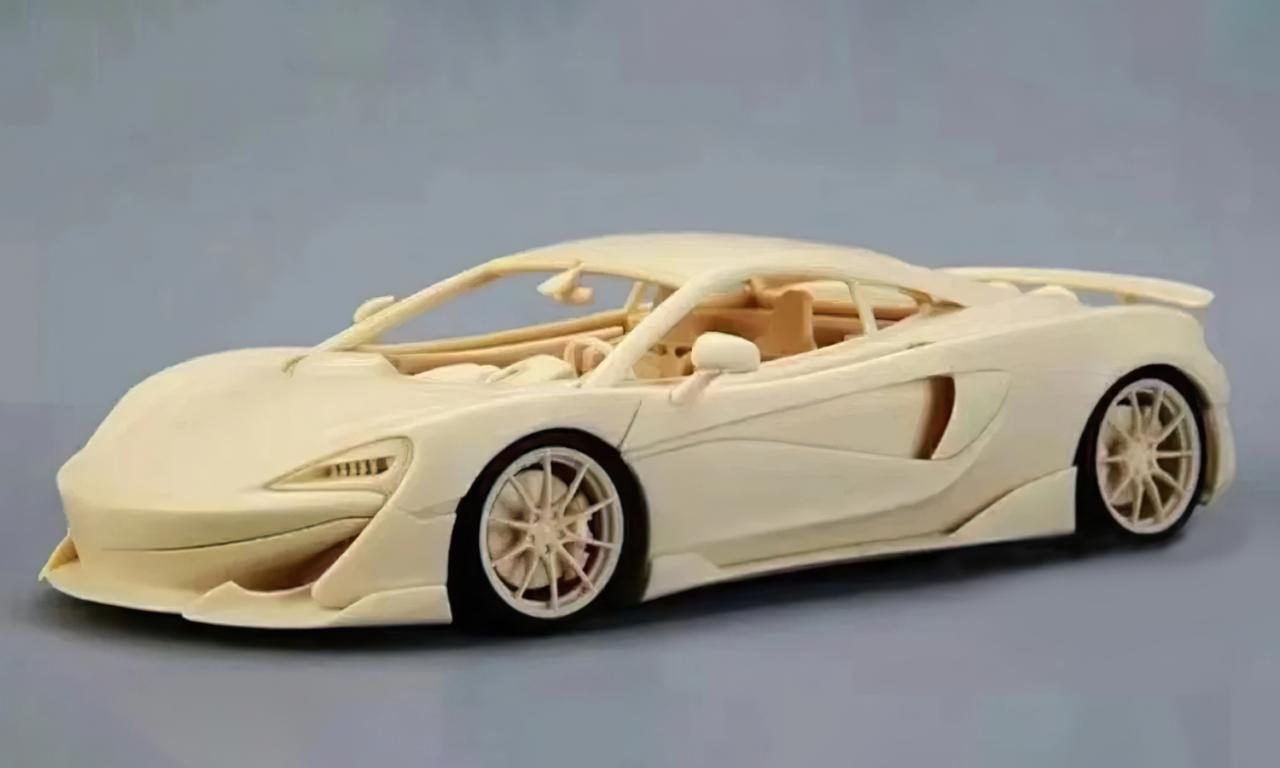
Several innovative companies have moved from concept to prototype to limited production, proving the viability of the low-cost 3D printed car.
A. Local Motors and The Strati: The Proof of Concept
Local Motors, a U.S.-based firm, made global headlines in 2014 by 3D printing the Strati live at the International Manufacturing Technology Show. The Strati’s entire body chassis, exterior, and interior was printed from carbon fiber-reinforced ABS plastic in about 44 hours and assembled in two days. While not a high-speed vehicle (top speed around 40 mph), it demonstrated the core principles: ultra-low part count, rapid localized production, and a projected price point that would be a fraction of conventional cars. Although Local Motors later pivoted, the Strati remains a landmark in automotive history.
B. XEV and the YOYO: Nearing Commercial Reality
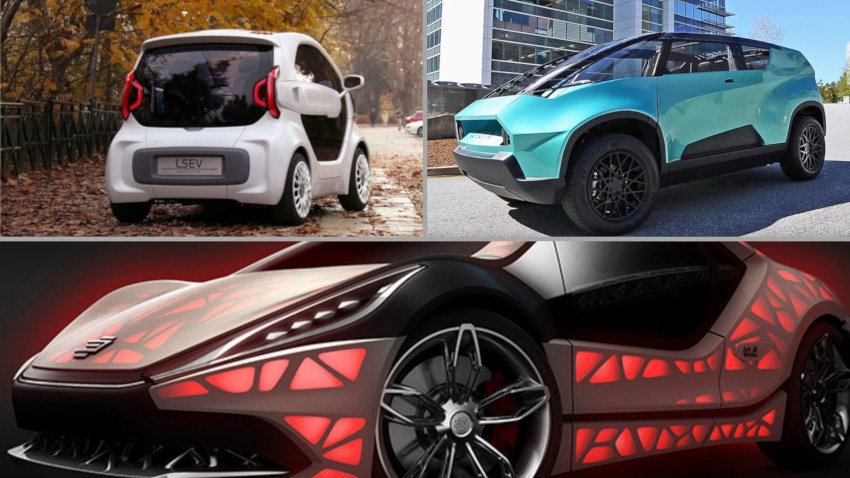
Italian-Chinese startup XEV has developed one of the most production-ready models: the YOYO. This compact, two-seater urban electric vehicle features a 3D printed polymer body with only 57 parts. It is designed for low-speed urban mobility, with a range of approximately 90 miles per charge. XEV has focused on the micro-factory model, signing agreements to set up small-scale production hubs across Europe and Asia. Its stated goal has consistently been to bring the YOYO to market at a price under $10,000, making it a flagship for this new price bracket.
C. The Olli: A Shared Mobility Solution
Also from Local Motors, the Olli is an autonomous, electric, 3D printed shuttle. While not a personal car under $10k, its inclusion is critical. It demonstrates the technology’s scalability and immediate application in niche markets like campuses, hospitals, and corporate parks. The business-to-business (B2B) and shared mobility sectors may be the initial proving grounds that fund R&D and drive down costs for the consumer personal vehicle market.
D. Emerging Players and DIY Kits
The landscape is expanding with projects like the LSEV from Polymaker and XEV, and even open-source initiatives. The potential for partially 3D printed “kit cars,” where enthusiasts print body panels to mount on a standardized rolling chassis (with motor, battery, and suspension), could further democratize manufacturing and push DIY build costs well below the $10,000 threshold.
The Multifaceted Advantages Beyond Cost
The appeal of 3D printed cars extends far beyond an attractive price tag, offering transformative benefits for consumers, society, and the planet.
A. Unprecedented Customization
In a digital manufacturing workflow, each print can be unique without slowing down the line or increasing cost. Consumers could personalize their car’s exterior design, body shape, interior layout, accessory integration (like bespoke storage compartments), and color at the digital model stage. Your car could truly be a reflection of your personal style, moving away from the “one-size-fits-all” model.
B. Enhanced Sustainability
The environmental case is strong. As noted, drastic waste reduction is a key benefit. Furthermore, many 3D printed cars are designed as electric vehicles from the ground up, eliminating tailpipe emissions. The local production model cuts down on the carbon-intensive global shipping of parts and finished vehicles. At end-of-life, components made from thermoplastics could be granulated and recycled into new filament, promoting a circular economy.
C. Accelerated Innovation and Rapid Prototyping
The design-to-production cycle is compressed from years to months. Manufacturers can rapidly prototype, test, and iterate designs based on real-world feedback. This agility means safety improvements, new features, and technological upgrades can be incorporated into models much faster than the traditional 5-7 year model cycle.
D. Resilient and On-Demand Manufacturing
The micro-factory network creates a resilient supply chain less vulnerable to global disruptions (as witnessed during semiconductor shortages). If a specific part breaks, a replacement can be printed locally on-demand, reducing downtime and eliminating the need for vast inventories of spare parts.
Navigating the Roadblocks: Challenges and Considerations
Despite the exciting potential, significant hurdles must be overcome before 3D printed cars under $10,000 become commonplace in every driveway.
A. Safety Standards and Crashworthiness
This is the paramount concern. Regulatory bodies like the NHTSA (USA) and Euro NCAP have rigorous crash-testing protocols developed for steel and aluminum vehicles. The crashworthiness of 3D printed polymer and composite structures is still being extensively validated. Companies must prove that their designs and materials can meet or exceed these existing safety standards to gain regulatory approval and public trust. This involves extensive simulation, testing, and material science innovation.
B. Material Limitations and Durability
While advanced composites are strong, questions remain about long-term durability under constant UV exposure, temperature fluctuations, and mechanical stress. How will these materials age over a 10-15 year lifespan? Resistance to scratches, dents, and environmental degradation needs to be on par with traditional materials for widespread consumer acceptance.
C. Production Speed and Scalability
While printing a car in days is fast for a prototype, it is slow for mass production compared to a conventional assembly line spitting out a car every minute. Scaling to meet potential global demand would require an extensive network of micro-factories and advancements in print speed, potentially through multiple synchronized printers working on a single chassis.
D. Perceived Value and Market Acceptance
Overcoming ingrained consumer perception is a marketing challenge. Can a car costing less than $10,000 be seen as safe, reliable, and desirable, or will it be dismissed as a “plastic toy”? Building brand reputation and demonstrating real-world reliability will be crucial for pioneers in this space.
The Road Ahead: Future Trajectories and Implications
The evolution of 3D printed cars will likely follow a phased path, reshaping industries along the way.
A. The Near Future (Next 5 Years):
We will see the consolidation of models like the XEV YOYO in specific markets, primarily as urban commuter vehicles or in B2B roles (delivery vans, shuttle services). Regulations will adapt, and new material certifications will emerge. The sub-$10,000 price will be achieved for basic, no-frills models in limited volumes.
B. The Mid-Term Horizon (5-15 Years):
As technology matures, we can expect a wider variety of models, including small family cars and specialized vehicles. Hybrid manufacturing using 3D printing for the complex body and integrating proven, off-the-shelf mechanical components (like axles, motors from established suppliers) will become common. The aftermarket and customization industry will boom.
C. Long-Term Disruption (15+ Years):
This technology could fundamentally decentralize manufacturing. The “file for a car” model might emerge, where you purchase a design license and have it printed locally. This would disrupt the entire automotive sales and dealership model. It could also revolutionize mobility in developing regions, where low-cost, locally-made vehicles could address transportation gaps without relying on expensive imports.
Conclusion
The vision of a reliable, road-legal 3D printed car for under $10,000 is steadily transitioning from a provocative concept to a tangible market offering. It is powered not by a single miracle innovation, but by a confluence of advancements in additive manufacturing, material science, and a radical rethinking of production logistics. While challenges in safety certification, material longevity, and scaling remain, the trajectory is clear. This technology promises more than just cheap cars; it heralds a future of personalized, sustainable, and locally-responsive manufacturing. It represents a profound shift from the centralized, capital-intensive industrial age to a flexible, digital, and democratized era of creation. The road ahead is being printed, one affordable, customized layer at a time.